

Can You Really Correct an Underbite Without Surgery?
Correcting an underbite without surgery is possible for many patients, and it is more common than most people expect.
Key Takeaways
- A comprehensive assessment with me helps determine whether a bite variation is primarily dental or skeletal in nature.
- Early clinical evaluation may help streamline orthodontic treatment options for growing children.
- Modern clear aligners and traditional braces offer non-surgical pathways that may be suitable for mild to moderate Class III malocclusions.
- I maintain transparent pricing structures to help Brisbane families plan their orthodontic care with confidence, which you can explore on our pricing page.
- My clinical approach focuses on tailored treatment plans designed around your individual experience and goals, which you can read about on the about Dr Nick page.
Here is a quick overview of your main non-surgical options:
- Clear aligners (Invisalign or Spark): suited to mild to moderate dental underbites
- Traditional or ceramic braces: effective for a range of Class III bite variations, often combined with elastics
- Early interceptive orthodontics: growth guidance appliances for young children, most effective during early childhood
- Restorative approaches: dental crowns or veneers to camouflage minor bite discrepancies in select cases
The right option depends on whether your underbite is dental (a teeth-positioning issue) or skeletal (a jaw structure issue). Dental underbites generally respond well to orthodontic treatment alone. Skeletal underbites may require a different approach, and in severe cases, a surgical referral may still be the most appropriate pathway.
A Class III malocclusion, the clinical term for an underbite, occurs when the lower front teeth sit in front of the upper front teeth when the mouth is closed. It can affect chewing, speech clarity, and jaw comfort. Some patients describe years of jaw discomfort or self-consciousness before seeking specialist advice, then discover that surgery was not actually necessary for their case.
For a deeper look at what a Class III bite involves clinically, visit What is a Class III Bite Anyway?
Similar topics to correct underbite without surgery:
About the Author
I’m Dr Nick, a Specialist Orthodontist based in Brisbane with over 30 years of experience and more than 11,500 patients treated across my Chermside practice. Throughout my career, I have helped many Brisbane patients correct underbites without surgery using tailored orthodontic treatment plans, and I personally attend every appointment: no associates, no delegation.
Understanding Dental vs Skeletal Class III Bites
To understand how we can correct underbite without surgery, we must first look at what is actually causing the misalignment. I categorise these variations into two distinct types during your clinical assessment.
A dental underbite occurs when your jaw development is relatively balanced, but your teeth have erupted at angles that create a reverse overlap. The upper teeth may tip slightly backward, or the lower teeth may flare forward, creating the appearance of a protruding lower jaw. These cases are highly responsive to non-surgical orthodontic care because we only need to guide the teeth into their correct alignment.
A skeletal underbite involves the actual growth and structure of your facial bones. This variation, also known as mandibular prognathism, occurs when the lower jaw grows faster or longer than the upper jaw. It can also occur if the upper jaw is underdeveloped.
Genetic factors play a major role in skeletal jaw development. If you or your child has a family history of a prominent lower jaw, this developmental pattern is more likely to appear.
During our initial consultation, I carefully evaluate these skeletal and dental relationships. You can learn more about identifying these variations in our comprehensive guide on Common Orthodontic Problems and How to Take Action.
How to Correct Underbite Without Surgery Using Modern Orthodontics
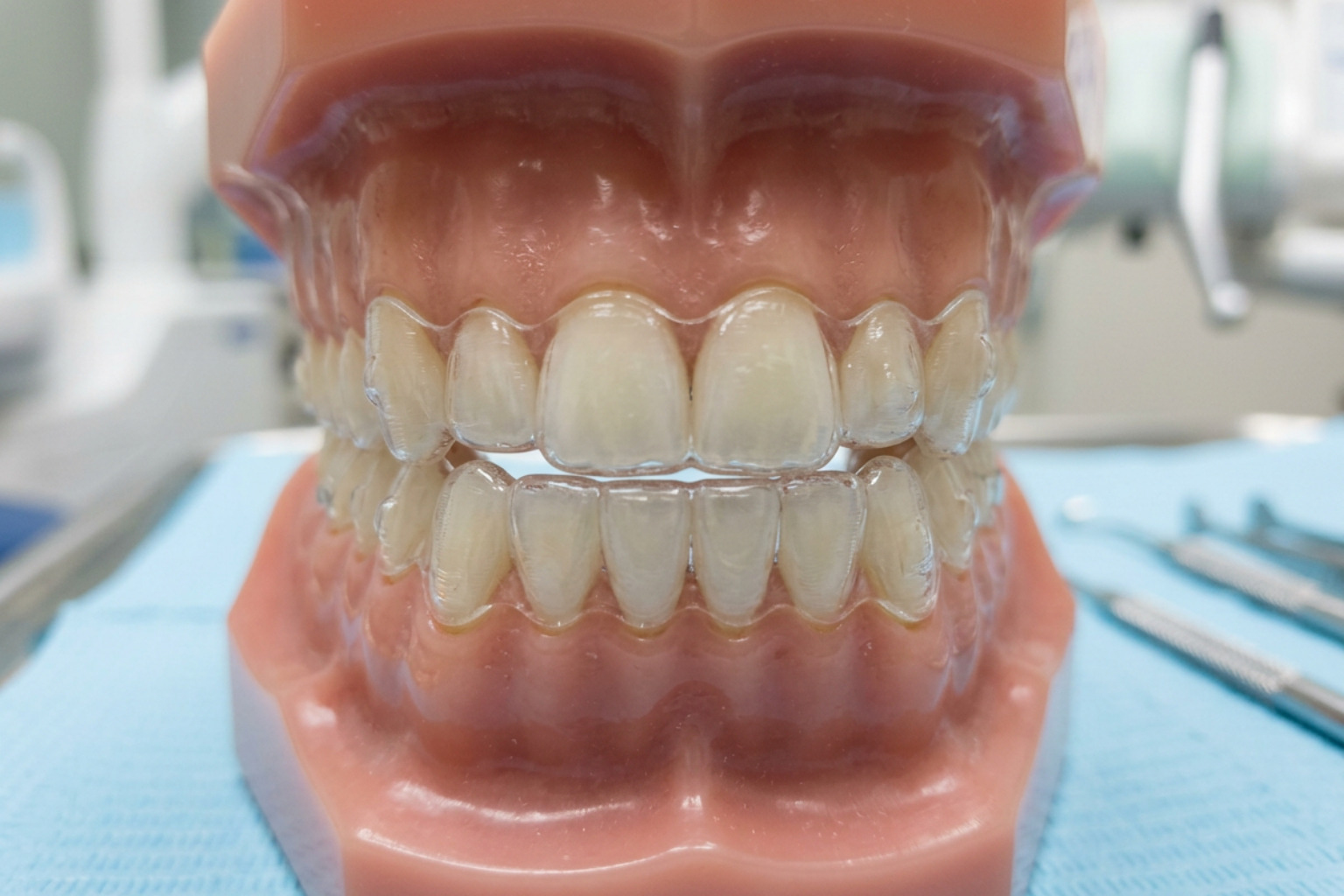
Modern orthodontic techniques have expanded our ability to address bite variations without invasive surgical procedures. By utilising targeted dental forces, we can carefully guide the teeth and supporting tissues into a more harmonious relationship.
The primary non-surgical tools in my practice are specialised clear aligners and traditional braces. These systems allow me to plan precise movements of individual teeth to help neutralise a Class III relationship.
For many patients, especially those with mild to moderate variations, these advanced orthodontic methods may help streamline the treatment process. They offer a reliable alternative to orthognathic surgery, allowing you to manage your treatment alongside your daily routine.
Clinical research supports the use of non-surgical orthodontic systems for early and moderate bite alignment. For a detailed clinical perspective on these methods, you can read the study on Early treatment of anterior crossbite in young patients using clear aligners.
Clear Aligners to Correct Underbite Without Surgery
Clear aligners have become an increasingly popular choice for patients looking to correct underbite without surgery. In my Brisbane practice, I utilise both Spark aligners and Invisalign systems to design custom treatment plans.
Both of these premium brands offer highly transparent, custom-fitted trays that are virtually unnoticeable during daily activities. I select the specific aligner material and design based on the unique mechanical requirements of your bite.
To plan your treatment, we use advanced digital modeling for clinical planning. This technology allows me to map out the exact movement of each tooth in a virtual environment before we manufacture your custom trays.
Using these digital models, we can plan complex tooth movements, such as tipping the upper teeth slightly outward and guiding the lower teeth backward. This combination can help create the space needed to resolve a mild reverse bite.
If you would like to know more about how custom aligners work, read The Magic of Custom Aligners: Your Personalized Path to a Straighter Smile.
Traditional and Ceramic Braces to Correct Underbite Without Surgery
Traditional metal braces and clear ceramic braces remain some of the most versatile and reliable tools in orthodontics. They give me maximum control over three-dimensional tooth movements, making them highly effective for moderate underbite variations.
Ceramic braces utilise brackets made of a clear or tooth-coloured material. This option offers a more discreet appearance for adults and teenagers who prefer a subtle look during their orthodontic care.
To achieve bite correction with braces, we often utilise orthodontic elastics. These small rubber bands attach to specific hooks on your upper and lower brackets.
The elastics apply a continuous, carefully calibrated force that helps guide the upper teeth forward and the lower teeth backward. Patient compliance in wearing these elastics as prescribed is the most important factor in achieving a balanced outcome.
For a detailed look at how ceramic and metal braces compare, you can read Everything You Need to Know About Orthodontist Clear Braces.
To see the types of clinical cases we regularly treat at our Brisbane practice, you can visit our smile gallery.
Early Intervention and Growth Guidance
The most effective time to guide jaw development is during early childhood, before the facial bones have fully set. Early intervention allows us to harness natural growth patterns to support balanced jaw relationships.
I recommend that parents bring their children for an initial orthodontic evaluation around the time their first permanent teeth begin to erupt. This early assessment allows me to monitor facial growth and identify developing Class III patterns before they become more pronounced.
If we detect a skeletal discrepancy early, we can use simple, removable plates or orthopedic appliances to support upper jaw development. This approach can sometimes help avoid the need for more complex treatments or surgical options later in life.
During these early assessments, I also observe functional habits, such as nasal breathing and swallowing patterns. Nasal breathing is a key clinical observation, as proper nasal airflow supports natural palate expansion and balanced facial growth.
To learn more about how we support our youngest patients, visit our page dedicated to kids under 10.
Understanding Non-Surgical Orthodontics vs. Surgical Referral Pathways
While many underbites can be managed beautifully with orthodontics alone, severe skeletal discrepancies may require a surgical approach. Because NK Orthodontist is a specialist orthodontic practice, we do not perform jaw surgery ourselves.
If your clinical assessment reveals a severe skeletal mismatch that cannot be safely managed with braces or aligners, I will provide a referral to an experienced oral and maxillofacial surgeon. We will then work collaboratively to manage your pre-surgical and post-surgical orthodontic care.
Here is a qualitative comparison to help you understand these two distinct pathways:
| Feature | Non-Surgical Orthodontics (Braces or Aligners) | Orthognathic Surgery (External Specialist Referral) |
|---|---|---|
| Primary Goal | Guides dental alignment and utilises elastics to compensate for mild-to-moderate skeletal variations. | Repositions the physical jawbones to address severe skeletal discrepancies. |
| Suitability | Most effective for dental underbites and mild-to-moderate skeletal variations. | Reserved for severe skeletal discrepancies and significant functional difficulties. |
| Treatment Experience | Non-invasive, gradual movement of teeth with no surgical recovery time required. | Involves a hospital stay, general anaesthetic, and a dedicated surgical recovery period. |
| Collaborative Care | Managed entirely by Dr Nick at our Chermside practice. | Co-managed by Dr Nick and an external oral and maxillofacial surgeon. |
| Financial Planning | Transparent orthodontic fees with interest-free payment plans, detailed on our pricing page. | Involves separate surgeon, hospital, and anaesthetist fees. |
Choosing the right pathway begins with a precise diagnosis. I will always discuss the most conservative, non-surgical options with you first to ensure you feel comfortable and informed.
Your Next Step with Dr Nick
If you are looking to correct underbite without surgery, the first step is a comprehensive clinical assessment. At NK Orthodontist, we have been helping Brisbane families navigate their orthodontic choices for over 30 years.
I personally see every patient at every single appointment. This means your care is never delegated to an assistant or an associate, ensuring you receive consistent, specialist attention from start to finish.
We operate from our convenient location in North Brisbane: Chermside. Our practice is designed to be warm, welcoming, and entirely transparent, with clear, transparent pricing structures and flexible interest-free payment plans to suit your family’s budget.
Ready to explore your options with an experienced specialist? I invite you to book a consultation with me today, and let us find the most comfortable, non-surgical pathway for your smile.
Frequently Asked Questions
Can adults correct an underbite without surgery?
Yes, many adults can successfully address an underbite using non-surgical orthodontic treatments. In my practice, I utilise modern clear aligners and traditional braces to guide dental movement and improve the relationship between the upper and lower teeth. This approach is often highly suitable for mild to moderate dental underbites where the underlying skeletal discrepancy is not severe. You can read more about adult treatment options on our page about Why It Is Never Too Late for a Straight Smile.
How does Dr Nick determine if my underbite is skeletal or dental?
I perform a comprehensive clinical evaluation using advanced diagnostic imaging to assess the relationship between your teeth and jaw bones. This assessment allows me to determine whether the underbite is caused by the positioning of the teeth or an underlying discrepancy in jaw growth. Identifying this distinction is essential for developing an appropriate, non-surgical treatment plan tailored to your specific anatomy.
What is the difference between Spark and Invisalign for underbite correction?
Both Spark and Invisalign are premium clear aligner systems that utilise advanced digital modeling for clinical planning. I select and customise these systems based on the specific movements required for your individual treatment plan. Both options offer high levels of clarity and customisation, allowing us to design a precise pathway for your bite correction.
Are there non-surgical options for children with underbites?
Yes, early intervention and growth guidance can be highly effective for young patients with developing underbites. By utilising specialised orthodontic appliances during early childhood, I can help guide jaw growth and support proper dental alignment. This early clinical observation often helps streamline future orthodontic needs as the child grows.
How long does non-surgical underbite correction typically take?
The duration of non-surgical underbite correction varies based on the complexity of the bite and the specific treatment modality chosen. Mild dental variations may require a shorter treatment period, while more complex skeletal discrepancies guided by braces or aligners may take longer. I will provide a personalised, qualitative timeline during your initial consultation after assessing your specific clinical needs.
What happens during the initial consultation for underbite correction?
During your initial consultation, I will conduct a thorough clinical assessment of your teeth, jaws, and facial profile. We will discuss your goals, explore suitable non-surgical treatment options, and review our transparent pricing structures. This session is designed to give you a clear, comprehensive understanding of your options without any pressure.
How do retainers help maintain the position of the teeth after underbite correction?
Retainers play a vital role in stabilising your teeth in their new positions once active orthodontic treatment is complete. Because teeth have a natural tendency to drift back toward their original alignment, wearing a retainer as prescribed helps preserve your results. I custom-design in-house clear plastic retainers or fixed wire retainers for each patient to support long-term stability and protect your investment in your smile.


