

Understanding Orthodontic treatment for adults
Orthodontic treatment for adults is more common than most people realise. Today, roughly 1 in 3 orthodontic patients is an adult, and that number continues to grow.
Key Takeaways
- Adult orthodontic treatment may be suitable at any age when gum and bone health is confirmed at your initial consultation.
- Crowding is the most frequently treated issue in adults, affecting around 40.6% of adult patients in clinical studies.
- Most adult treatments are completed within 12 to 24 months; minor cases may take as little as 6 to 9 months.
- Clear aligner systems such as Invisalign and Spark aligners require approximately 22 hours of wear per day for the treatment plan to stay on track.
- For full details on investment and payment options, visit our pricing page.
Quick answer: What you need to know about adult orthodontic treatment
- Adult orthodontic treatment is suitable at any age, provided your gums and supporting bone are healthy.
- The most common reasons adults seek treatment are crowding, bite variations, and teeth that have shifted over time.
- Treatment typically takes 12 to 24 months, depending on case complexity and the appliance used.
- Modern options include clear aligners (Invisalign and Spark), ceramic braces, and traditional metal braces.
- Results are long-lasting with consistent retainer wear after treatment is complete.
Many adults put off treatment for years, often assuming it is only for teenagers, or feeling self-conscious about the idea of wearing braces in a professional environment. The reality is that adult orthodontics has changed significantly. Discreet appliance options, flexible appointment schedules, and a clearer understanding of the long-term oral health benefits have made treatment far more accessible and practical for adults across Brisbane and beyond.
Teeth also do not stay still as we age. Even adults who had braces as teenagers can experience gradual shifting, especially without consistent retainer use. Others are addressing issues for the first time, whether that is crowding, a bite variation, or jaw discomfort that has worsened over the years.
I am Dr Nick, a Specialist Orthodontist with over 30 years of experience and founder of NK Orthodontist in Brisbane. Throughout my career, I have provided orthodontic treatment for adults across a wide range of cases, from minor alignment adjustments to complex bite corrections, and I personally attend every patient appointment at both our Chermside and Spring Hill locations. In this guide, I will walk you through everything you need to know to decide whether adult orthodontic treatment is right for you.
The landscape of dental care has shifted significantly in recent years. While orthodontics was once viewed as a rite of passage for teenagers, current statistics show that approximately 20% to 33% of all orthodontic patients in the United States and Australia are now over the age of 18. This rise is driven by a combination of technological advancements and a greater awareness of oral health.
Adults often seek treatment because they missed the opportunity as children or because their teeth have shifted with age. Healthy teeth can be moved at any age. The primary requirement is that the supporting structures, specifically the gums and jawbone, remain in good health.
Benefits of Orthodontic treatment for adults
The motivations for seeking treatment as an adult often extend beyond aesthetics. Aligned teeth are significantly easier to clean, which may reduce the likelihood of plaque buildup and gingivitis. When teeth are crowded or rotated, maintaining effective oral hygiene becomes a challenge, potentially leading to tooth decay or bone loss over time.
Correcting your bite can also help distribute chewing forces more evenly. This may reduce the need for extensive restorative work later in life by helping to avoid irregular enamel wear. You can find more information about these health advantages in our guide to adult orthodontics.
Duration of Orthodontic treatment for adults
On average, adult orthodontic treatment lasts approximately 18.6 months. However, the timeframe is highly individual and depends on the complexity of the movements required. Some minor adjustments may be suitable for shorter plans of 6 to 9 months, while more comprehensive cases can take up to 24 months.
Biological factors play a role in this timeline. Because adult bone is denser and has finished growing, the remodelling process occurs at a different rate than in adolescents. We provide a breakdown of what to expect regarding timelines on our pricing page.
Common Clinical Reasons for Adult Braces
Many adults find that dental variations that were minor in their youth become more pronounced over time. Physical changes in the jaw and the natural aging process can cause teeth to drift or cluster.
Research indicates that crowding is the most prevalent issue, affecting 40.6% of adult patients. This is followed by malocclusion at 24.2% and overbite at 18.8%. Addressing these concerns is often a proactive step toward maintaining long-term dental function and comfort.
Addressing Dental Crowding
Crowding occurs when there is insufficient space in the jaw for all teeth to fit normally. This often leads to teeth overlapping or being pushed out of alignment. From a clinical perspective, the main concern with crowding is hygiene access.
When teeth overlap, it creates tight spaces that are difficult to reach with a toothbrush or floss. By aligning the teeth, we can help simplify your daily cleaning routine and potentially reduce the risk of periodontal issues. This is part of the broader role of a dental alignment specialist.
Correcting Bite Variations
A bite variation refers to how the upper and lower teeth meet. If the teeth do not fit together correctly, it can lead to unnecessary jaw strain or discomfort. This is often linked to issues such as overbites, underbites, or open bites.
Correcting these variations may help improve chewing efficiency and reduce the strain on the temporomandibular joint (TMJ). For more specific answers on how bite alignment works, you can visit our FAQ page.
Modern Appliance Options for Adult Patients
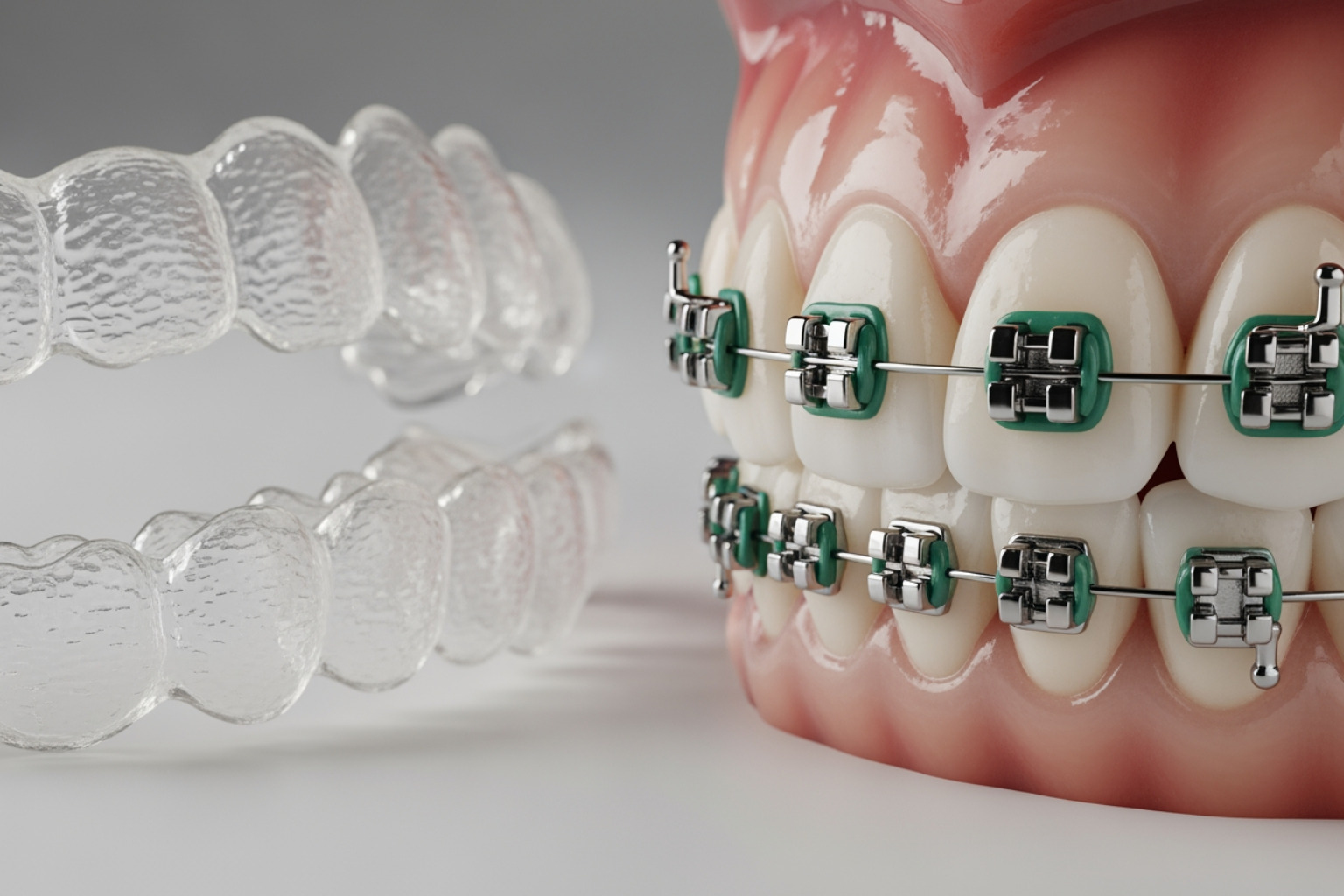
One of the reasons more adults are choosing treatment today is the availability of discreet appliances. We no longer rely solely on traditional metal brackets. Modern materials allow for options that blend in with your professional and social life.
Our practice offers a variety of systems, including metal braces, clear ceramic braces, and leading aligner brands. You can read more about these in our guide to invisible braces.
Discreet Aligner Systems
Clear aligners are a popular choice for adults who prefer a removable option. Systems like Invisalign and Spark aligners use a series of custom-made plastic trays to guide teeth into position.
These trays are virtually invisible and are removed for eating and cleaning. To be effective, they must be worn for 22 hours per day. We use digital modelling for clinical planning to create a precise series of aligners tailored to your specific needs.
Fixed Orthodontic Appliances
Fixed braces remain a highly versatile tool for managing complex tooth movements. Modern braces are much smaller and more comfortable than those used in previous decades.
For adults concerned about visibility, ceramic braces offer a tooth-coloured alternative to stainless steel. These brackets blend with the natural colour of your enamel, providing a less noticeable appearance while still offering the precision of a fixed appliance.
Clinical Considerations for Mature Patients
Treating adults requires a different approach than treating children. Because adult jaws have finished growing, we cannot rely on growth-guided techniques. Instead, we focus on moving teeth within the existing bone structure.
Adults are also more likely to have a history of dental work. This does not prevent treatment, but it does require careful planning. We must account for the presence of crowns, fillings, or even missing teeth when designing your plan.
Managing Previous Dental Work
If you have existing restorations, such as crowns or bridges, we can often bond brackets to them using specialised adhesive techniques. In cases where a bridge is present, it may need to be sectioned to allow individual teeth to move.
For patients with missing teeth, orthodontics can be used to either close the gap or preserve the space for a future implant. We coordinate closely with your general dentist to ensure your modern orthodontics plan integrates with your overall dental health.
Compliance and Success Factors
Success in adult treatment is heavily influenced by patient compliance. Interestingly, clinical studies have shown a negative correlation between age and compliance, suggesting that younger adults are often more diligent with their instructions than older cohorts.
Education and gender also play roles in treatment satisfaction. Studies have found that female patients often report higher levels of satisfaction with their results. Regardless of these factors, following the prescribed wear times for aligners or elastics is the most significant contributor to a successful outcome.
Maintaining Results and Oral Hygiene
Maintaining excellent hygiene is essential throughout your treatment. If you choose fixed braces, you will need to adapt your brushing technique to clean around the brackets and wires.
We recommend using interproximal brushes or floss threaders to reach the spaces between teeth. For those using aligners, cleaning the trays daily is vital to prevent plaque buildup. You can find more tips on maintaining your appliances in our guide for older adults.
The Importance of Retention
The retention phase is just as important as the active treatment phase. Teeth have a natural tendency to shift back toward their original positions, a process known as relapse. This is a common reason why adults seek treatment later in life if they failed to wear retainers as teenagers.
To prevent this, Dr Nick typically utilises a combination of fixed wire retainers bonded behind the teeth and clear removable retainers. Consistent use of these retainers is a lifelong commitment to preserving your alignment.
Managing Discomfort
It is normal to feel some pressure after your appliances are fitted or adjusted. This discomfort is usually manageable and temporary. We suggest using paracetamol if needed.
We advise avoiding NSAIDs like ibuprofen, as some clinical evidence suggests they may interfere with the prostaglandins necessary for tooth movement. If a bracket causes irritation to your cheek, applying a small amount of orthodontic wax can provide immediate relief.
Frequently Asked Questions
Is it too late to get braces as an adult?
It is never too late to consider orthodontic treatment as long as your teeth, gums, and supporting bone are healthy. Many adults in their 50s, 60s, and 70s now seek treatment to improve their oral health and function. Dr Nick can assess your suitability during an initial consultation.
How long does adult orthodontic treatment typically take?
Most adult treatments are completed within 12 to 24 months, though minor adjustments may take as little as 6 to 9 months. Because adult bone is denser than that of adolescents, the remodelling process can sometimes require a slightly longer timeframe. Your specific timeline will be outlined in your personalised treatment plan.
Does orthodontic treatment for adults hurt?
You may experience some minor discomfort for a few days following the initial fitting or subsequent adjustments. This is typically managed effectively with over-the-counter paracetamol and the application of orthodontic wax. Most patients find that they adapt to their new appliances within one to two weeks.
Can I get braces if I have crowns or missing teeth?
Orthodontic appliances can be successfully bonded to most dental restorations, including crowns and veneers, using specialised techniques. If you have missing teeth, treatment can often be designed to close the gaps or create the necessary space for a future implant or bridge. Dr Nick coordinates closely with your general dentist for these interdisciplinary cases.
How much does adult orthodontic treatment cost?
The cost of treatment varies based on the complexity of the case and the type of appliance selected, such as Spark aligners or ceramic braces. We provide transparent, all-inclusive pricing so you know the total investment before starting. You can view more details on our pricing page.
Do I need to wear a retainer forever?
Wearing retainers is a lifelong commitment to ensure your teeth remain in their new positions. Teeth have a natural tendency to shift over time due to age and physiological changes. Dr Nick typically recommends a combination of a fixed wire retainer and a clear removable retainer for long-term stability.
Will braces affect my speech or professional life?
Most adults find that any minor speech changes resolve within a few days as the tongue adapts to the appliance. Discreet options like Spark clear aligners or ceramic braces are designed to be less noticeable in professional and social settings. Many patients report that the improvement in their confidence outweighs the temporary adjustment period.
How do I choose between braces and clear aligners?
The choice between braces and aligners depends on your clinical needs, lifestyle, and personal preferences. While aligners offer removability and discretion, fixed braces may provide more precise control for certain complex tooth movements. Dr Nick will discuss the advantages of each option during your consultation to help you make an informed decision.
Your Next Step with Dr Nick
Brisbane families choose NK Orthodontist for personalised care at our Chermside and Spring Hill locations. Dr Nick brings over 30 years of experience to every case and personally sees every patient at every appointment, so your treatment is never handed off. We also offer transparent, all-inclusive pricing and flexible interest-free payment plans to help make care more manageable. To learn more about costs and what to expect, visit our pricing page.


