

Understanding Modern Orthodontic Treatments for Adults
Modern orthodontic treatments have expanded well beyond metal brackets and wires. Here’s what you need to know.
Key Takeaways
- Modern orthodontic treatments may be suitable for adults of any age, provided gums and supporting bone structures are healthy.
- Initial consultations typically take 30 to 45 minutes and include a comprehensive clinical assessment.
- Clear aligner systems generally require 20 to 22 hours of daily wear to support consistent progress.
- Treatment durations often range from 12 to 24 months depending on case complexity.
- Digital modeling for clinical planning allows orthodontists to simulate tooth movement pathways before treatment begins.
Here is a quick overview of the main options available to adults in 2026:
| Treatment Type | Best Suited For | Typical Duration |
|---|---|---|
| Clear aligners (Invisalign, Spark) | Mild to moderate alignment issues | 12 to 24 months |
| Ceramic braces | Moderate to complex cases, discreet look | 18 to 24 months |
| Traditional metal braces | Complex rotations and bite corrections | 18 to 30 months |
| Self-ligating braces | Reduced friction, fewer adjustments needed | 12 to 24 months |
More adults than ever are seeking orthodontic care, and not just for cosmetic reasons. Properly aligned teeth may help simplify oral hygiene routines, reduce uneven wear on tooth surfaces, and support better jaw function over the long term. The options available today are more discreet, more precise, and more compatible with a busy professional life than they were even a decade ago.
If you have been putting off treatment because the idea of metal braces did not fit your lifestyle, the landscape has changed significantly.
I am Dr Nick, a Specialist Orthodontist with over 30 years of experience and founder of NK Orthodontist in Brisbane, where I have personally provided modern orthodontic treatments to more than 11,500 patients across our Chermside and Spring Hill locations. In this guide, I will walk you through the full range of options available to adults, what to realistically expect from treatment, and how to decide which approach may suit your clinical needs and daily life.
Orthodontics is the oldest dental specialty, dedicated to diagnosing and treating dental malocclusions and facial irregularities. While many people associate these treatments with teenagers, the biological process used to move teeth remains effective throughout adulthood. In a specialist setting, we focus on moving the teeth and jaws into a healthier alignment to support long-term oral health.
Dr Nick is a specialist orthodontist who completed three years of additional full-time university residency training after his dental degree. He has treated more than 11,500 patients, with experience in adult orthodontic care, including cases where existing dental work or periodontal health needs to be considered.
The primary goal of modern orthodontic treatments is to create a balanced relationship between the teeth and jaws. This involves more than just straightening the front teeth. We look at how the upper and lower arches fit together, which can sometimes help avoid excessive wear on the enamel and may reduce the likelihood of jaw joint tension.
The Evolution of Modern Orthodontic Treatments
Orthodontic materials have undergone a significant technological shift. In the past, stainless steel was the primary material for archwires, often requiring frequent and forceful adjustments. Today, we utilize nickel-titanium and copper-titanium alloys.
These heat-activated wires respond to the temperature of your mouth, allowing them to apply a more consistent and predictable force over a longer period. This material science evolution has led to longer intervals between appointments, often extending to eight weeks.
Newer research into shape-memory polymers is further refining how we move teeth. These smart materials can recover their original shape when triggered by thermal stimuli, potentially reducing the total number of appliances needed during a treatment plan. For a deeper look at these advancements, the study Orthodontic Aligners: Current Perspectives provides an evidence-based review of how materials have changed.
Digital Planning in Modern Orthodontic Treatments
The days of biting into messy, gag-inducing alginate molds are largely over. We now use high-definition intraoral scanners to capture thousands of frames per second, creating a precise 3D digital model of your teeth.
This digital modeling for clinical planning allows us to use predictive software to map out every movement before any appliance is placed. We can simulate different pathways to find the most biomechanically efficient route for your teeth to take.
This proactive approach means we can identify potential “collisions” or obstacles in the bite early on. By using these 3D simulations, we can customize brackets or aligners to the exact morphology of your teeth, which supports a more streamlined experience.
Discreet Alignment Options for the Workplace
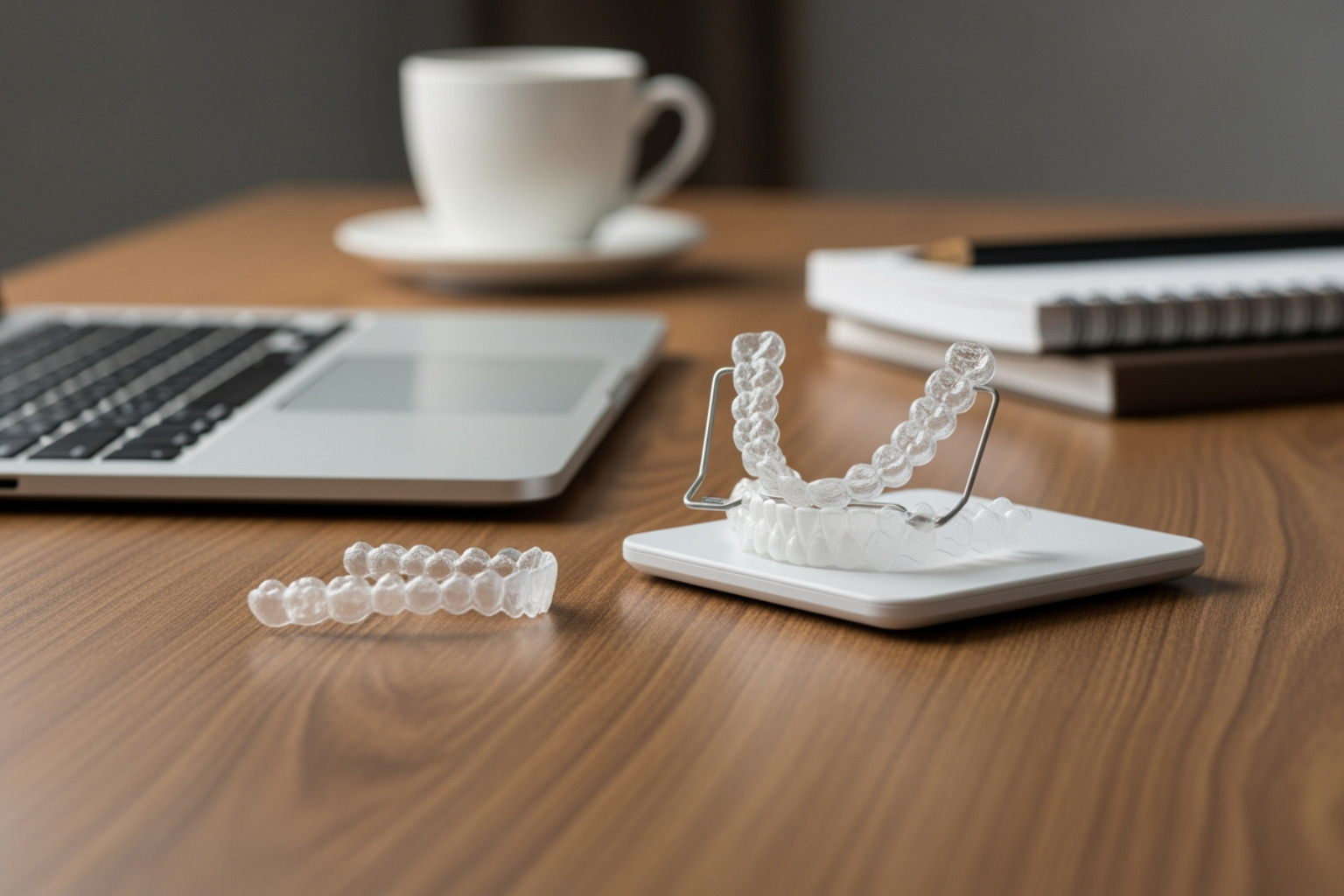
For many Brisbane professionals in Spring Hill or Chermside, discretion is a top priority. You may need to lead meetings, present to clients, or attend social events without feeling self-conscious about your dental appliances.
Modern techniques have made it possible to achieve significant alignment changes using materials that are nearly invisible to the casual observer. Whether you choose removable trays or fixed ceramic options, the focus remains on maintaining your professional appearance. You can explore The Complete Guide to Invisible Braces for a comparison of these discreet methods.
Clear Aligner Systems
Clear aligners, such as Invisalign and Spark aligners, are a popular choice for adults. These systems consist of a series of custom-made, BPA-free medical-grade plastic trays that gradually guide your teeth into position.
One of the primary benefits of aligners is their removability. You can take them out to eat, drink, and perform your normal oral hygiene routine. This means there are no dietary restrictions and no need for specialized flossing tools.
However, success with aligners depends heavily on patient compliance. To stay on track with your clinical plan, you must wear the trays for 20 to 22 hours every day. Most patients swap to a new set of trays every one to two weeks as the teeth progress. You can read more about The Magic of Custom Aligners to see how they fit into a modern lifestyle.
Modern Fixed Appliances
If you prefer a treatment that does not require the discipline of removable trays, Braces remain a highly effective tool. Modern fixed appliances are much smaller and more streamlined than those used in previous decades.
Ceramic braces utilize translucent or tooth-colored brackets that blend in with your natural enamel. When paired with frosted or clear wires, they offer a very subtle look. These are often used for moderate to complex cases where the precise control of a fixed appliance is necessary.
We also offer self-ligating systems. These use specialized clips to hold the wire in place instead of traditional elastic ties. This design reduces friction, which can sometimes help simplify the cleaning process and may reduce the number of adjustment appointments required. For more details on bracket technology, see our guide Beyond the Basics: Understanding Braces Types.
Managing Treatment Timelines and Expectations
Understanding the timeframe for modern orthodontic treatments helps you plan around your professional and personal commitments. While every case is unique, the following table provides a general comparison of what to expect.
| Feature | Clear Aligners | Fixed Braces |
|---|---|---|
| Daily Commitment | 22 hours of wear | Always active |
| Check-up Frequency | Every 8 to 12 weeks | Every 6 to 8 weeks |
| Hygiene | Normal brushing/flossing | Requires extra care |
| Dietary Rules | None (remove to eat) | Avoid hard/sticky foods |
| Best For | Mild to moderate cases | All case complexities |
Most adult treatments range from 12 to 24 months. During this time, we monitor your progress closely to ensure the teeth are moving according to the digital plan. You can find more information in our article Unlock Your Best Smile: Modern Orthodontics Explained.
Factors Influencing Treatment Speed
Biological response is the most significant factor in how quickly teeth move. Teeth move through the bone via a cellular process of remodeling. Everyone’s biology responds at a different rate, and we cannot force bone to remodel faster than its natural physiological limits.
Case complexity also plays a role. Closing a small gap typically takes less time than correcting a significant overbite or rotating a molar. Patient compliance is the third pillar; for aligner patients, not wearing the trays for the required hours will lead to delays and “off-tracking.”
A specialist orthodontist manages these variables by adjusting the force levels and movement sequences throughout the process. To learn more about how we oversee this, visit Beyond Braces: The Role of a Dental Alignment Specialist.
The Retention Phase
The day your braces or aligners come off is a significant milestone, but it is not the end of the process. Teeth have a natural tendency to want to return to their original positions, a phenomenon known as relapse.
Retention is a lifelong commitment to maintain the stability of your alignment. We typically use a combination of:
- Fixed Retainers: A thin, stainless steel wire bonded to the back of the front teeth where it cannot be seen.
- Removable Retainers: Clear trays worn at night to keep the entire arch in place.
Consistent retainer wear supports long-term stability for most patients. You can visit our case gallery to see the types of cases we treat and the lasting results we aim for.
Long-Term Oral Health Benefits of Alignment
While many Brisbane adults seek modern orthodontic treatments to feel more confident in professional photos or presentations, the clinical benefits are equally important. Alignment is a fundamental part of preventive dental care.
When teeth are crowded or overlapped, they create tight spaces that are difficult to reach with a toothbrush or floss. This often leads to a buildup of plaque and tartar, increasing the risk of gum disease and decay. By aligning the teeth, we make these surfaces more accessible for daily cleaning.
Improved Hygiene and Function
Proper alignment helps distribute bite forces evenly across all your teeth. When teeth are misaligned, certain teeth may take more “punishment” during chewing than others. This can lead to chipped edges, cracked enamel, and premature wear.
Correcting the bite also supports jaw joint (TMJ) health. A misaligned bite can sometimes contribute to muscle strain and tension in the jaw. Improving how the teeth meet can help create a more harmonious environment for the jaw muscles and joints. For more answers on how alignment affects health, check our FAQ.
Preventing Future Dental Issues
By addressing alignment concerns now, you may reduce the need for more invasive restorative work in the future. Teeth that are poorly positioned are more prone to gum recession and bone loss over time.
Strategic orthodontic intervention can also help manage issues like speech clarity or difficulty chewing certain foods. It is a long-term investment in the “machinery” of your mouth. You can see examples of different clinical situations in our smile gallery.
Your Next Step with Dr Nick
Choosing the right specialist is the most important part of your orthodontic experience. At NK Orthodontist, we believe in a personalized, no-delegation model of care. This means Dr Nick personally sees every patient at every single appointment at our Chermside and Spring Hill locations.
With over 30 years of experience and more than 11,500 patients treated, Dr Nick combines clinical expertise with the latest modern orthodontic treatments. We are proud of our 565+ five-star Google reviews, which reflect our commitment to clear communication and a positive patient experience.
We offer transparent, all-inclusive pricing so you know exactly what to expect from the start, with no hidden fees for retainers or follow-up visits. We also provide flexible, interest-free payment plans to help make specialist care accessible.
If you are ready to explore your options, we invite you to take the first step. You can start with our free online assessment or book a consultation to meet Dr Nick in person and receive a customized clinical plan.
Frequently Asked Questions
What are the primary goals of modern orthodontic treatments?
The primary goals involve the diagnosis and clinical management of dental malocclusions and jaw irregularities. Specialist orthodontists aim to improve the alignment of teeth and the relationship between the upper and lower jaws. This process can sometimes help simplify oral hygiene routines and may reduce the likelihood of uneven tooth wear over time.
How long does adult orthodontic treatment typically take?
Most adult treatments range from 12 to 24 months depending on the specific clinical requirements. Simple cases involving minor crowding may be suitable for shorter timeframes of 6 to 9 months. Dr Nick provides a specific estimated timeline during the initial consultation after reviewing digital scans and clinical observations.
Are clear aligners as effective as traditional braces for adults?
Clear aligners are often highly effective for mild to moderate alignment issues and bite corrections. Fixed braces remain a popular choice for complex cases involving significant rotations or vertical tooth movements. A specialist orthodontist evaluates the health of the gums and bone to determine which modality is most appropriate for the individual.
How often are appointments required during treatment?
Patients typically visit the practice every 4 to 8 weeks for progress monitoring and adjustments. Modern techniques and high-tech wires often allow for longer intervals between appointments compared to older methods. Some systems also utilise remote monitoring tools to help track progress between in-chair visits.
Is there an age limit for starting orthodontic treatment?
There is no upper age limit for orthodontic treatment provided the teeth, gums, and supporting bone structures are healthy. Many adults in their 40s, 50s, and 60s choose modern options to address long-standing alignment concerns. The biological process of tooth movement remains effective throughout adulthood.
What should I expect during the initial consultation?
The initial consultation involves a comprehensive clinical examination and digital modeling for clinical planning. Dr Nick personally reviews the scans to discuss potential treatment pathways and estimated durations. Patients also receive a transparent, all-inclusive quote and information regarding interest-free payment plans.
How do I maintain my results after the braces or aligners are removed?
Stability is maintained through the consistent use of retainers as directed by the specialist orthodontist. This usually involves a combination of a thin wire bonded behind the teeth and a clear removable retainer worn at night. Retainers are essential to prevent teeth from gradually shifting back toward their original positions.


