

Are Invisible Braces the Right Choice For You?
Key Takeaways
- Invisible braces, also called clear aligners, may be suitable for some mild to moderate orthodontic issues, depending on the individual case.
- Aligners must be worn for 22 hours per day and removed only for eating, drinking, and oral hygiene.
- Each set of custom-made trays is usually changed every 1 to 2 weeks to gradually move teeth.
- Specialist orthodontist supervision is important to help treatment stay safe and on track.
- Flexible payment options are available to help manage costs – see the pricing page for details.
Achieving a straighter smile is a popular choice using clear aligners.
I am Dr Nick, a Specialist Orthodontist with over 30 years of experience in Brisbane and the founder of NK Orthodontist. I am a member of the Australian Society of Orthodontists, and I take a conservative approach that prioritises long-term oral health. I personally see patients at every appointment in Chermside and Spring Hill so each person benefits from consistent, experienced care.
This article explains how invisible braces work, which brands are available in Australia, and the importance of specialist supervision.
How Invisible Braces Work for Teeth Alignment
Invisible braces utilise a sequence of custom-fabricated, transparent plastic aligners to apply controlled, gentle pressure to specific teeth. Specialist orthodontists like Dr Nick utilise sophisticated 3D computer imaging technology to map the entire movement process before the first aligner is even manufactured. Each set of aligners is engineered to move teeth a fraction of a millimetre over a 7 to 14-day period.

The Treatment Process
The process begins with a comprehensive in-person consultation where Dr Nick performs a clinical examination. We use high-resolution 3D scanners to create a digital model of the teeth, eliminating the need for messy traditional impressions. According to Healthdirect Australia, orthodontic treatment is most effective when managed by a qualified professional.
Wear Requirements
Success with invisible braces depends heavily on patient discipline. You must wear the aligners for 22 hours every day to ensure the teeth move according to the digital schedule. You should only remove the trays for eating, drinking anything other than plain water, and performing your daily oral hygiene routine.
Comparing Invisible Braces and Traditional Braces
Clear aligners provide a removable and nearly undetectable alternative to fixed metal brackets and wires. While braces remain a highly effective tool for complex structural corrections or severe bite issues, invisible braces manage mild to moderate crowding and spacing with significant functional advantages. Many patients find aligners more comfortable because the smooth plastic surfaces do not have sharp edges that might irritate the inner cheeks or lips.
| Feature | Clear Aligners | Traditional Braces |
|---|---|---|
| Visibility | Nearly invisible | Visible metal or ceramic |
| Removability | Yes, for eating and cleaning | No, fixed for duration |
| Food Restrictions | None | Avoid hard, sticky foods |
| Hygiene | Normal brushing and flossing | Requires special tools |
| Comfort | Smooth plastic | Potential for wire pokes |
Hygiene and Lifestyle
The ability to remove your orthodontic appliance is a major benefit for maintaining oral health. You can brush and floss your teeth normally without navigating around wires or brackets, which reduces the risk of plaque buildup during treatment. There are also no dietary restrictions; you simply remove the trays to enjoy your favourite foods. This flexibility makes invisible braces a popular choice for busy professionals and active teenagers in North Brisbane.
Functional Benefits
Clear aligners are a popular choice for adults due to their functional design. The transparent medical-grade plastic is a preferred option for its utility during conversation. This allows patients to benefit from a treatment method that is well-suited for professional or social settings. You can view examples of various outcomes in our case gallery to see how different individuals have experienced the treatment.
Popular Brands of Invisible Braces in 2026
Invisalign and Spark aligners are the two leading systems utilised by specialist orthodontists in Australia. Invisalign is widely recognised for its proprietary SmartTrack material, which is specifically designed for predictable tooth movements and enhanced patient comfort. These aligners are trimmed precisely to the patient’s individual gum line, which prevents the plastic from rubbing against sensitive soft tissues.
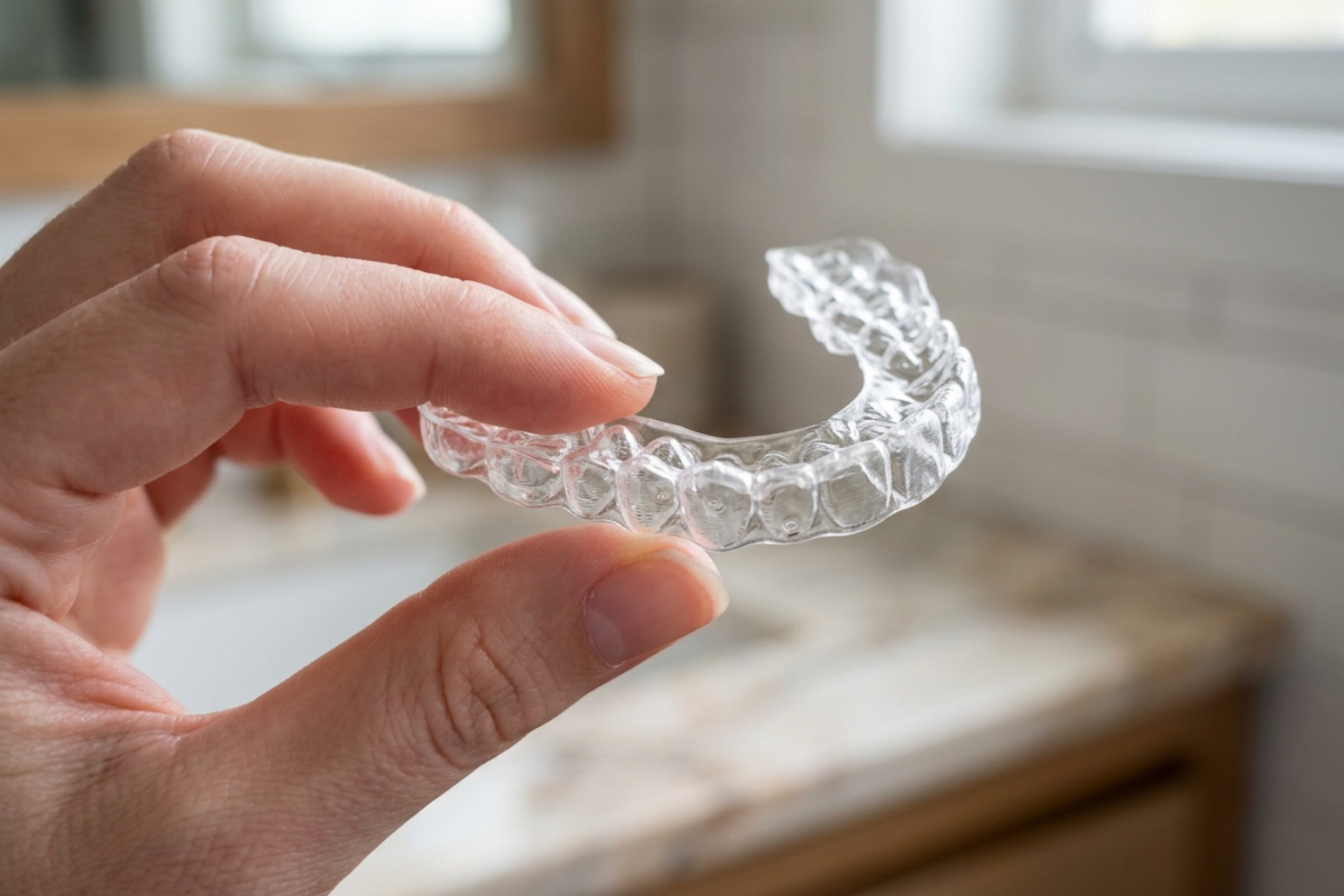
Choosing Between Invisalign and Other Invisible Braces
Invisalign remains a widely used system in the industry due to its extensive research database and advanced material technology. The SmartTrack material provides a more constant, gentle force compared to older aligner plastics. Dr Nick evaluates each patient to determine if Invisalign is the most suitable system for their specific needs.
The Role of Spark Aligners in Modern Invisible Braces
Spark aligners have gained popularity for their functional design, making them one of the most preferred options available in 2026. They are designed to be highly polished and thin, which can help some patients adapt to them more quickly. Regardless of the brand chosen, the most important factor is the clinical expertise of Dr Nick who designs and monitors the treatment plan.
Treatment Duration and Compliance Requirements
Most treatments with invisible braces take between 6 and 18 months, though mild cases may be completed in as little as 24 weeks. The complexity of the initial alignment and the specific goals of the patient dictate the total timeframe. Because the aligners are removable, the speed of progress is entirely in the hands of the patient.
- Initial Phase (Weeks 1-4): Adapting to the trays and establishing a wear routine.
- Active Movement (Months 2-12): Progressing through the series of trays to reposition teeth.
- Refinement (Optional): Fine-tuning the position of specific teeth for an optimal result.
- Retention (Ongoing): Wearing a retainer to ensure the teeth stay in their new positions.
Daily Compliance Checklist
- Wear your aligners for a minimum of 22 hours every day.
- Remove the trays only when eating or drinking fluids other than water.
- Clean the aligners every morning and night using a soft toothbrush.
- Always store your trays in their protective case to avoid loss or damage.
- Transition to your next set of trays on the exact day specified by Dr Nick.
Real Patient Results with Invisalign
Clear aligner therapy, including Invisalign, has helped many adult patients achieve noticeable improvements in both function and appearance. Below are examples of real treatment outcomes showing how tooth alignment can change over time while maintaining a discreet and comfortable experience.


Addressing Concerns About Invisible Braces
It is normal to have questions about how aligners will affect your daily life, especially regarding speech and comfort. Some patients notice a slight lisp for the first 48 to 72 hours as the tongue adjusts to the thin layer of plastic. This usually resolves quickly with regular talking. Discomfort is generally mild and typically feels like a sensation of pressure when you first put in a new set of trays.
Age Appropriateness and Suitability
While often associated with adults, invisible braces are suitable for a wide range of ages. We offer early intervention for children as young as 7 to manage developing issues, and many teenagers prefer the functional benefits of aligners for school and sports. To see if you or your child are a candidate, you can complete our online assessment form for a preliminary review.
Payment Flexibility and Costs
We believe that specialist orthodontic care should be accessible to Brisbane families. NK Orthodontist provides transparent, all-inclusive pricing so there are no unexpected fees for appointments or retainers. We offer flexible, interest-free payment plans to help spread the cost of treatment over time. You can find more information on our pricing page.
Your Next Step with Dr Nick
Brisbane families choose NK Orthodontist for Dr Nick’s 30 years of clinical experience and hands-on care. Dr Nick personally sees every patient at every appointment in our Chermside and Spring Hill locations, helping ensure invisible braces treatment is carefully monitored with a high level of specialist expertise.
With over 565 five-star Google reviews, our practice is known for its warm, professional environment and commitment to honest, conservative care. Whether you are visiting us from North Brisbane or the CBD, we are dedicated to providing a clear and straightforward path to your orthodontic goals.
Ready to find out if clear aligners are right for you? Book a consultation with Dr Nick today.
Frequently Asked Questions
Are invisible braces as effective as metal braces?
Clear aligners are highly effective for managing a wide range of orthodontic issues, including crowding, gaps, and certain bite problems. While traditional braces might be recommended for very severe structural changes, modern aligner technology handles most mild to moderate cases with excellent precision. Dr Nick will assess your specific functional requirements to determine which method is most appropriate for you.
How do I clean my clear aligners?
You should rinse your aligners with lukewarm water every time you take them out of your mouth to prevent saliva from drying on the plastic. Clean them thoroughly at least once a day using a soft-bristled toothbrush and a small amount of clear liquid soap or specialised cleaning crystals. Never use hot water, as it can warp the medical-grade plastic and ruin the fit of the tray.
Can children use invisible braces?
Yes, children can use clear aligners as part of an early intervention strategy. We often see children from age 7 to assess their dental development and determine if Phase I treatment is necessary. Dr Nick will evaluate whether invisible braces or a different type of appliance is the best choice for your child’s specific growth patterns and dental needs.


