

Choosing an orthodontist for teenagers starts with a conversation about your teen’s teeth, bite, daily routine and preferences. I recommend looking for clear clinical explanations, direct specialist oversight and a plan that suits the individual rather than a one-size-fits-all approach.
Key Takeaways
- An orthodontic assessment can help clarify whether your teenager’s tooth alignment or bite would benefit from monitoring or treatment.
- Braces and clear aligners each have different practical requirements, so the right choice depends on your teenager’s clinical needs and day-to-day routine.
- Ask who will oversee appointments, explain the treatment plan and answer questions throughout care.
- Discuss what is included in treatment and review the pricing information before you decide.
About the Author: I am Dr Nick, a Specialist Orthodontist with more than 30 years of experience in private practice. I have guided more than 11,500 patients and personally oversee consultations and orthodontic care for teenagers and families in Chermside, Brisbane.
Signs Your Teenager May Benefit from Orthodontic Treatment
Teenage years can be a useful time to arrange an orthodontic assessment because most permanent teeth are present and facial growth is still developing. I look at the position of the teeth, the bite, jaw relationships and your teenager’s own concerns before discussing whether monitoring or treatment may be appropriate.
You may notice crowding, spaces, teeth that sit out of line, or a bite that does not meet evenly. These are clinical observations, not something to judge at home, and an assessment can put them in context.
Common reasons families book an appointment include:
- Crowded or overlapping teeth.
- Noticeable spaces between teeth.
- A deep bite, where the upper front teeth overlap the lower front teeth.
- An underbite, where the lower front teeth sit ahead of the upper front teeth.
- A crossbite, where some upper teeth sit inside the lower teeth.
- An open bite, where some teeth do not meet when the back teeth are together.
Chewing difficulties, repeated cheek biting, jaw clicking or concerns about keeping teeth clean can also be worth discussing. I will assess these factors carefully and explain what they may mean for your teenager’s orthodontic care.
Treatment Options From an Orthodontist for Teenagers
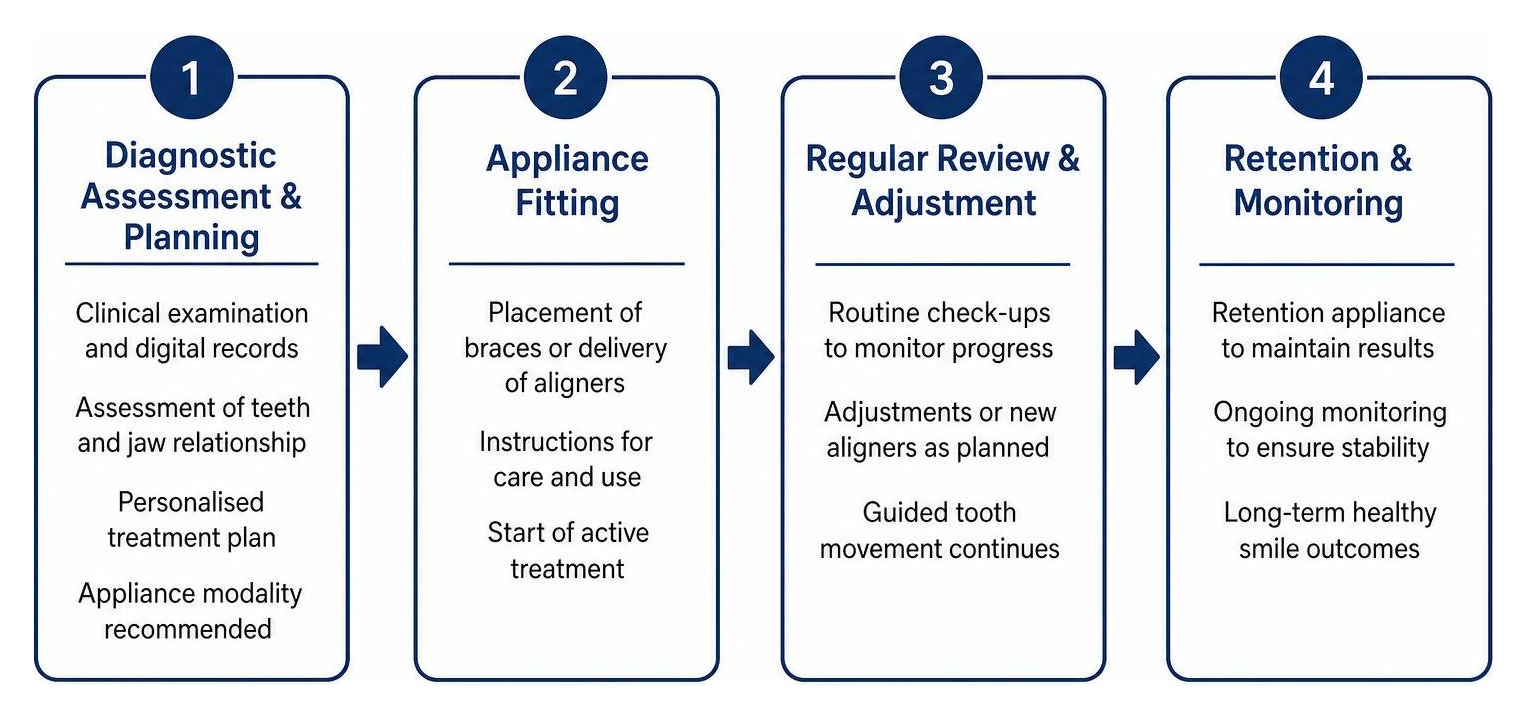
The right orthodontic option depends on your teenager’s bite, tooth positions, growth pattern and willingness to follow the care instructions. I use digital imaging and digital modelling for clinical planning to guide a personalised discussion about braces or clear aligners.
| Treatment option | What it involves | Day-to-day consideration |
|---|---|---|
| Metal braces | Fixed brackets and wires that remain in place. | They need careful brushing around brackets and wires. |
| Clear ceramic braces | Fixed tooth-coloured brackets. | They offer a less noticeable fixed-brace option for suitable cases. |
| Clear aligners | Removable clear trays, including Spark aligners and Invisalign. | They require consistent wear and careful storage when removed. |
Fixed Braces and Customised Appliances
Fixed braces can be suitable for a wide range of orthodontic presentations because they remain in place throughout treatment. I use them to guide planned tooth movements and monitor progress at review appointments.
Metal brackets are a common option, and some teenagers enjoy choosing the colour of their elastic ties. Clear ceramic braces are another fixed option when a less noticeable appearance is important.
Some treatment plans may also involve additional appliances, depending on the clinical assessment. You can explore the braces options we provide before your consultation.
Clear Aligners for Teenagers
Clear aligners are removable trays that may suit teenagers who can follow the agreed wear routine. I use digital modelling for clinical planning to map each stage and check that the aligners are tracking as intended.
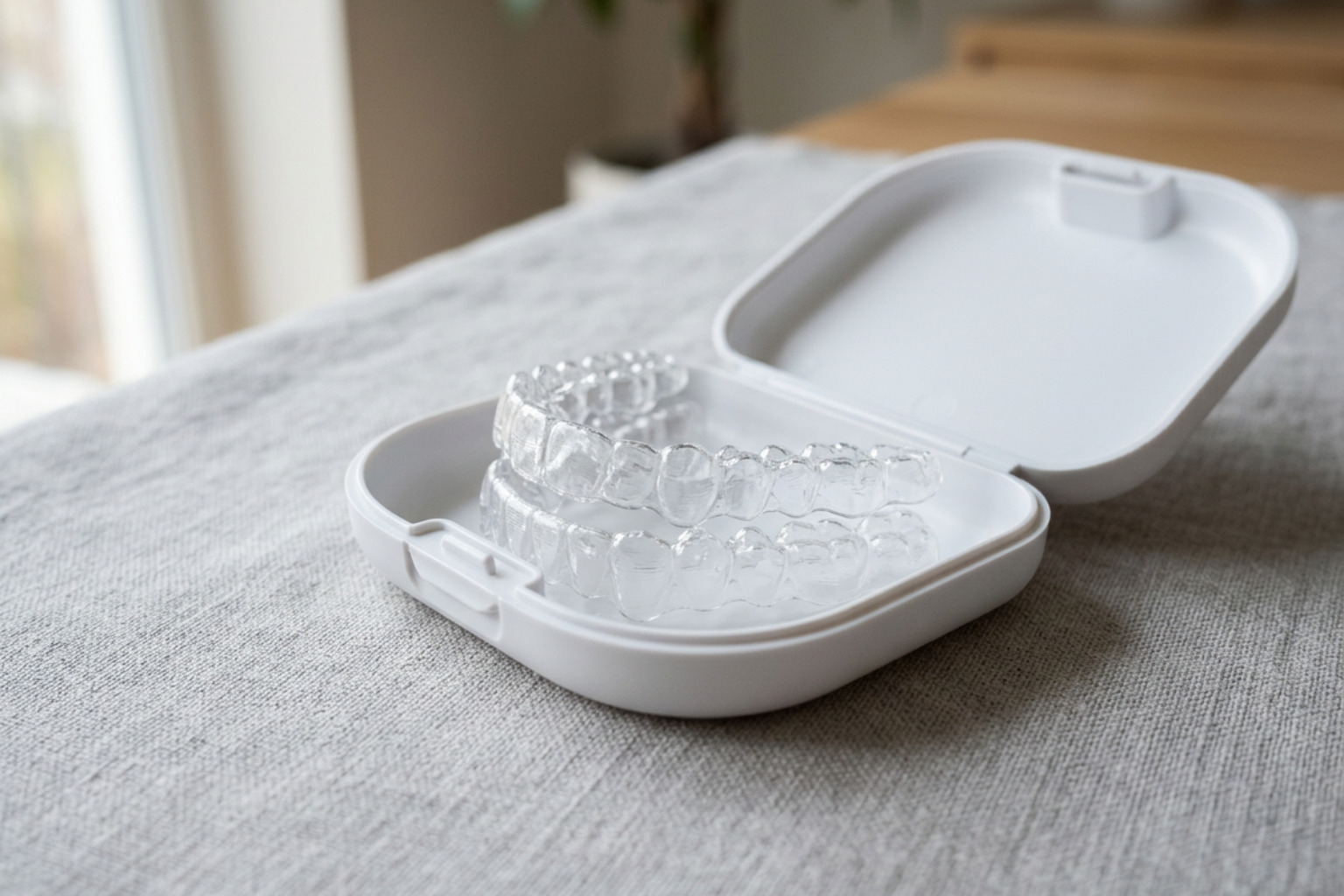
Your teenager removes aligners for meals, drinks other than water and oral hygiene. Consistent wear matters, so I will explain the responsibilities clearly before recommending this option.
What to Look for When Choosing an Orthodontist for Your Teen
A clear consultation should help you understand who is providing care, what your teenager’s assessment involves and how decisions will be made. I encourage parents to ask direct questions and make sure the answers are clear.
Specialist Oversight and Continuity of Care
Orthodontists undertake additional university training focused on tooth movement, bite relationships and facial development. When you are choosing an orthodontist for teenagers, ask whether the same Specialist Orthodontist will review progress and make treatment decisions throughout care.
At NK Orthodontist, I personally see patients at every appointment. This gives families continuity and allows me to adjust the treatment plan when clinical findings or your teenager’s needs change.
Clear Information About Treatment and Fees
Ask for a written explanation of the proposed treatment, what appointments and retainers are included, and how the practice handles unexpected appliance issues. Clear information helps families compare what each plan involves without relying on assumptions.
Your consultation is also the right time to discuss private health insurance, payment arrangements and any practical questions about school, sports or oral hygiene. The important point is that your family understands the plan before choosing to proceed.
Teen Life With Braces or Clear Aligners
Orthodontic care needs to work alongside school, sport, music and social commitments. I talk through the practical routines early so teenagers and parents know what to expect.
Sport and Everyday Care
Teenagers who play contact sport should ask about an orthodontic mouthguard that allows room for fixed braces. A mouthguard can help protect the lips, cheeks, teeth and appliance during sport.
Daily cleaning also matters. Braces require brushing around brackets and wires, and clear aligners need regular cleaning alongside normal brushing and flossing.
If a bracket loosens or a wire begins to rub, contact the practice for advice rather than trying to adjust it at home. Australian oral health guidance from Teeth.org.au also encourages protective mouthguards for contact sport.
Retention After Active Treatment
Retainers help maintain the positions reached during active orthodontic treatment. I will explain the type of retainer recommended and how to care for it.
Retention may involve clear removable plastic retainers made in-house, a fixed wire retainer behind the lower front teeth, or a combination of both. Ongoing reviews allow me to check the retainer fit and discuss any concerns.
Your Next Step With Dr Nick
Choosing orthodontic care for your teenager is a personal decision, and you should feel comfortable asking questions before you commit. With more than 30 years of specialist experience, I provide direct, consistent care and clear explanations at every stage.
At my Chermside practice, I personally oversee consultations and treatment appointments, with a transparent approach to planning and communication. If you would like to discuss your teenager’s options, book a consultation with Dr Nick.
Frequently Asked Questions
When should my teenager see an orthodontist?
An orthodontic assessment can be helpful when permanent teeth are coming through or when you notice a change in tooth position or bite. I assess the teeth, jaws and facial growth together, then explain whether monitoring or treatment may be appropriate. The timing varies between teenagers.
What happens at a teenage orthodontic consultation?
A consultation involves a clinical examination and a discussion about your teenager’s concerns and routine. I may use photographs, scans or other imaging where clinically appropriate. You will have time to ask questions about the assessment and available options.
Are braces or clear aligners better for teenagers?
Neither option is automatically better for every teenager. Braces and clear aligners have different clinical and daily-care considerations. I recommend an option only after assessing the bite, tooth positions and your teenager’s ability to follow the required routine.
Can my teenager play sport with braces?
Yes, many teenagers continue playing sport with braces. For contact sport, I recommend discussing a suitable orthodontic mouthguard with the practice. Your teenager should also let us know if an appliance is damaged during an activity.
How should teenagers clean braces or clear aligners?
Teenagers with braces need to brush carefully around brackets and wires, along with regular flossing or interdental cleaning where advised. Clear aligners should be cleaned as directed and removed for meals and oral hygiene. I will demonstrate the routine that suits the appliance being used.
What if a bracket loosens or an aligner does not fit properly?
Contact the practice for advice if anything feels loose, sharp or out of place. Do not try to cut, bend or repair an appliance at home. I can advise on the next step and arrange a review where needed.
Why are retainers important after orthodontic treatment?
Retainers are an important part of maintaining the positions reached during active treatment. Teeth can change position over time, so I provide clear instructions about wear and care. Follow-up reviews help me check that the retainer remains appropriate.
How can I book an appointment for my teenager?
You can contact NK Orthodontist to arrange a consultation in Chermside. At the appointment, I will assess your teenager’s needs and talk through the suitable options. There is no pressure to make a decision on the day.


