

Getting Straight Answers for Your Child’s Smile
When a child’s teeth start coming through crooked, it can be hard to know what is normal and what needs professional attention. This guide explains the common causes, warning signs, and treatment options so parents can make confident decisions at the right time.
Key Takeaways
- Early orthodontic assessments may help identify developmental variations before they become more complex.
- Monitoring childhood oral habits can sometimes help avoid severe bite misalignments.
- Consulting a specialist orthodontist early allows for growth-guided observation. More Info on Kids Under 10.
- Transparent pricing structures help families plan for future care without hidden surprises. View Our Pricing Page.
- Not every child with crooked teeth requires immediate treatment. A personalised assessment determines the most appropriate path forward.
Crooked teeth in a child are more common than most parents realise. In fact, research suggests that around nine in ten people have at least some degree of dental misalignment. For many children, this is a normal part of development. For others, it may point to bite or jaw concerns that are worth monitoring early.
Quick answers for parents:
- What are crooked teeth in children? Teeth that are misaligned, crowded, or do not meet properly when the jaw closes, clinically known as malocclusion.
- What causes them? A combination of genetics, jaw size, early tooth loss, and oral habits such as thumb sucking or mouth breathing.
- When should I act? An initial orthodontic assessment is recommended when permanent incisors begin to erupt in early childhood. Most children do not need immediate treatment, but early observation matters.
- What are the risks of waiting? Untreated bite issues may affect chewing, speech, oral hygiene, and jaw development over time.
- What are the treatment options? Depending on the child’s age and development, options may include monitoring, early intervention appliances, clear aligners, or braces.
This guide covers everything parents need to know, from what causes misalignment, to when to seek advice, to what modern orthodontic care for children looks like.
I’m Dr Nick, a Specialist Orthodontist based in Brisbane with over 30 years of experience and more than 11,500 patients treated throughout my career, including many children presenting with crooked teeth concerns at various stages of childhood development. In the sections ahead, I’ll walk you through what the evidence says, what I look for clinically, and how families in Brisbane can approach this with confidence.
Crooked teeth in children word roundup:
Understanding Malocclusion and Crooked Teeth in Children
Malocclusion is the clinical term we use to describe teeth that do not align perfectly. When a child with crooked teeth presents to my Brisbane clinic in Chermside, we look at how the upper and lower teeth meet. A normal bite allows the upper teeth to sit slightly over the lower teeth, with the molars fitting together like gears.
Developing teeth can sometimes erupt at unusual angles, rotate, or overlap. This variation can affect the child’s chewing function and make it harder to process certain foods. It can also influence speech development, as the tongue relies on precise tooth placement to form specific sounds.
Leaving significant misalignments unmonitored can sometimes lead to uneven wear on the enamel. Crowded teeth also create tight spaces that are difficult to reach with a toothbrush or dental floss. This can increase the likelihood of plaque accumulation, which may lead to tooth decay or gum irritation over time. The Orthodontics Australia guidance on when to visit an orthodontist explains that an early orthodontic visit can help families understand whether a child’s developing teeth and bite need monitoring.
Bite issues can also impact how the jaw joints develop as the child grows. For more detailed information on these variations, you can read our guide on Common Orthodontic Problems.
Primary Causes of Dental Misalignment in Children
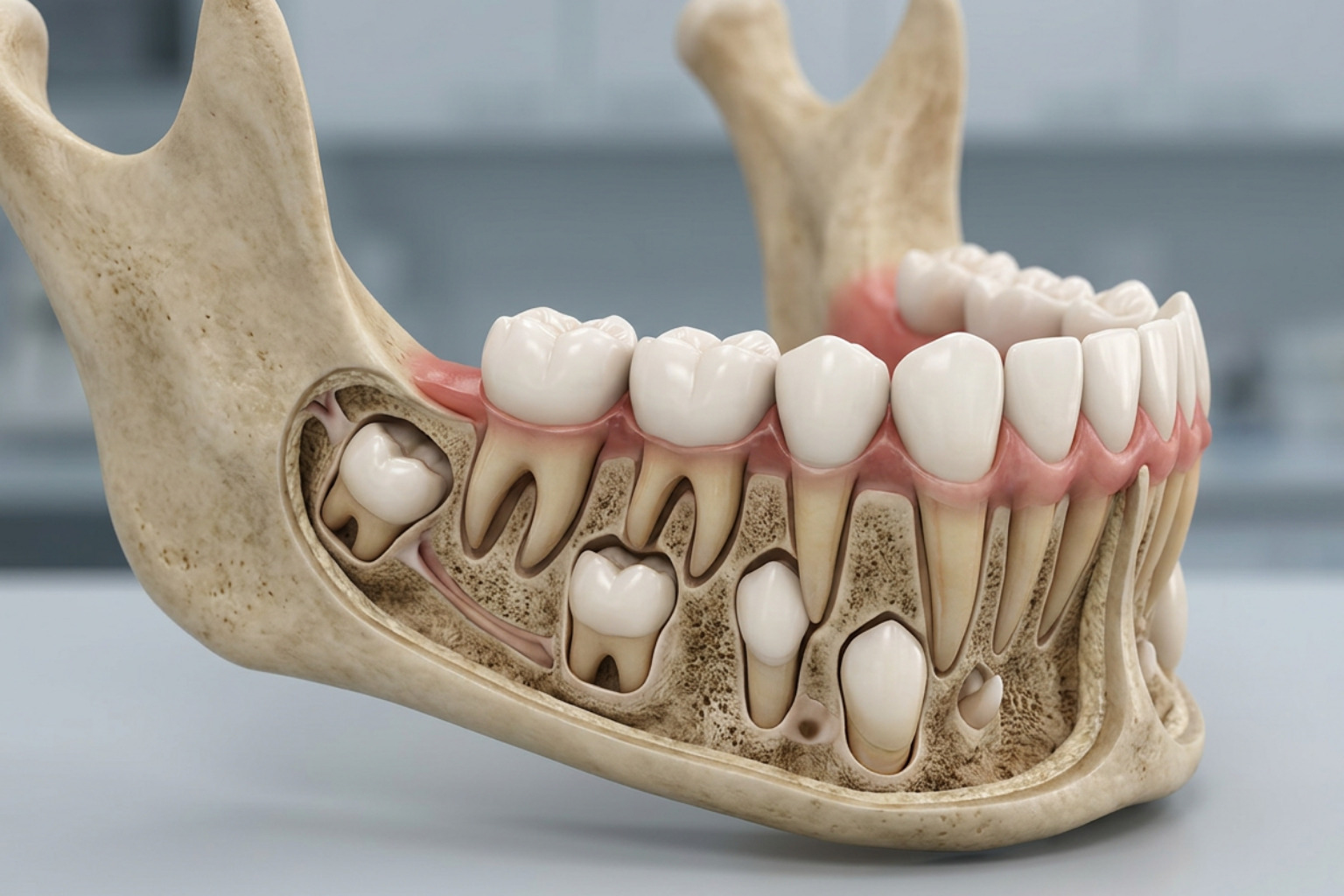
Genetics play a significant role in the development of a child’s smile. A child often inherits their jaw size from one parent and tooth size from the other. If a child inherits large teeth but a small jaw, crowding naturally occurs because there is insufficient space in the arch.
Primary teeth act as essential placeholders for the permanent teeth waiting beneath the gums. If a child loses a baby tooth early due to decay or trauma, the adjacent teeth may drift into the open space. This shifting can block the path of the erupting permanent tooth, causing it to emerge crookedly.
We also observe natural variations in tooth development. International research reports that hypodontia, or congenitally missing teeth, appears more often in permanent teeth than in baby teeth. Supernumerary, or extra, teeth can also occur in both primary and mixed dentition. These extra or missing teeth can disrupt the alignment of the remaining teeth, so I assess these findings in the context of each child’s development.
Behavioural Factors That Can Cause Crooked Teeth in Children
Repetitive childhood habits can exert continuous, light pressure on developing bones and teeth. Sucking a thumb or finger past early childhood can gradually alter the shape of the upper jaw. This habit often creates an open bite, where the front teeth do not meet even when the back teeth are closed.
Tongue thrusting is another behaviour that can influence alignment. This occurs when a child pushes their tongue forward against the front teeth during swallowing or speech. Over time, this resting pressure can tip the front teeth outward.
Mouth breathing, often caused by enlarged tonsils, adenoids, or chronic allergies, also plays a role. When a child breathes primarily through their mouth, their tongue rests on the floor of the mouth rather than the palate. The lack of lateral support from the tongue can result in a narrower upper arch, which contributes to crowding. You can explore these habit-related anomalies further in this International Research on Developing Dentition Anomalies and our article on Early Orthodontic Treatment.
Identifying Signs of Bite and Alignment Issues
Parents can look for several physical signs that may indicate a developing bite issue. Crowding is often the most visible sign, appearing as overlapping, rotated, or bunched teeth. You might also notice a significant overbite, where the upper front teeth protrude excessively over the lower teeth.
An underbite is present when the lower front teeth sit ahead of the upper front teeth. A crossbite occurs when some upper teeth sit inside the lower teeth when biting together. This can cause the child to shift their jaw to one side to find a comfortable chewing position.
We also pay close attention to functional signs during development. An overjet in excess of 3 mm is associated with an increased risk of incisor injury. Large overjets exceeding 8 mm can result in dental trauma in more than 40% of children, as the prominent front teeth lack protection from the lips. Teeth grinding, jaw clicking, or difficulty chewing firmer foods are additional signs that warrant professional observation.
When to Seek Professional Advice for a Child with Crooked Teeth
I recommend booking an initial consultation during the early mixed dentition stage, when the first permanent teeth begin to erupt. This typically occurs in early childhood, around the time the first permanent molars and incisors appear.
During this growth phase, we can evaluate the relationship between the jaws and monitor the eruption sequence of the remaining adult teeth. Ectopic eruption of permanent first molars occurs in up to 3% of the population, and permanent canines can appear in an impacted position in 1% to 3% of children. Detecting these path deviations early allows us to plan the most effective monitoring or intervention.
Most children who visit my Chermside clinic at this stage do not require immediate treatment. We often place them in a supervised recall programme to monitor their natural dental development. For more guidance on this timing, please read our articles on When to See an Orthodontist and Kids Under 10.
Modern Orthodontic Options for Growing Smiles
When treatment is indicated for a child with crooked teeth, we have access to a variety of modern clinical approaches. Early intervention focuses on guiding jaw growth and creating adequate space for erupting permanent teeth. This approach can sometimes help guide future treatment during adolescence.
Space maintainers are small, fixed appliances used when a primary tooth is lost prematurely. They hold the adjacent teeth in their correct positions, preserving the gap for the permanent tooth to erupt naturally. For children with narrow upper jaws, expansion appliances can widen the arch gradually to resolve crowding and correct crossbites. You can read about a clinical example of early correction in this Research on Early Crossbite Correction.
Traditional braces remain a highly reliable option for aligning teeth and correcting complex bite relationships. We offer both classic metal braces and clear ceramic braces, which provide a more discreet appearance. Clear aligner systems, such as Invisalign and Spark, are also widely adopted for children, utilising digital modelling for clinical planning to guide teeth into alignment. To learn more, view our guides on Children’s Dental Braces and Kids Orthodontic Options.
| Treatment Phase | Common Objectives | Typical Appliances Used |
|---|---|---|
| Early Intervention | Guide jaw growth, preserve space, correct crossbites, and manage oral habits. | Space maintainers, expansion appliances, partial braces. |
| Adolescent Treatment | Comprehensive alignment of all permanent teeth and final bite correction. | Full braces (metal or ceramic), clear aligners. |
Helping Your Child Take the Next Step
At NK Orthodontist, we believe that every child deserves a personalised, stress-free introduction to orthodontic care. I have been practising as a Specialist Orthodontist in Brisbane for over 30 years, and I personally see every single patient at every appointment. We never delegate your child’s care to assistants or hygienists, ensuring they receive consistent, expert attention throughout their development.
We operate from our convenient location in Chermside, serving families across North Brisbane and the wider region. We are committed to transparent pricing structures with no hidden fees, and we offer flexible, interest-free payment plans to make quality care accessible.
If you have noticed signs of alignment variations in your child, or if they are ready for their first developmental check, I invite you to take the next step. Book an In-Person Consultation with me today to discuss your child’s growth and explore their options in a warm, welcoming environment.
Frequently Asked Questions
Can crooked baby teeth lead to crooked permanent teeth?
Yes, crooked baby teeth can sometimes influence the alignment of permanent teeth. When primary teeth are crowded or lost prematurely, the surrounding teeth may shift into the empty spaces, which can block the proper eruption of adult teeth. Monitoring these early changes allows us to plan growth-guided support if necessary.
What is the best age for a child to have their first orthodontic assessment?
The recommended age for an initial orthodontic assessment is during early childhood, typically when the first permanent incisors begin to erupt. This timing allows a specialist orthodontist to evaluate jaw growth and dental development while the facial bones are still actively growing. Most children do not require immediate treatment, but early monitoring helps identify the optimal window for any future care.
How do childhood habits like thumb sucking affect dental alignment?
Prolonged oral habits such as thumb sucking or pacifier use can significantly impact a child’s developing bite. The constant resting pressure from a thumb or finger may alter the shape of the upper jaw and lead to variations like an open bite or flared front teeth. Addressing these habits early in childhood can sometimes help avoid more complex orthodontic issues later.
What are the signs that my child might need early orthodontic intervention?
Parents should watch for signs such as early or late loss of baby teeth, difficulty chewing, mouth breathing, or teeth that do not meet normally. You might also notice jaw clicking, teeth grinding, or teeth that appear severely crowded or misplaced. An early consultation can provide clarity on whether these observations warrant active management or simple monitoring.
Can clear aligners be used to treat a child with crooked teeth?
Yes, clear aligners are a popular and widely adopted option for children requiring orthodontic care. Modern aligner systems are designed to accommodate growing jaws and erupting permanent teeth, offering a discreet alternative to traditional braces. A comprehensive clinical evaluation will determine if clear aligners are the most suitable approach for your child’s specific developmental needs.
Is early orthodontic treatment always necessary?
No, early orthodontic treatment is not always required for every child with minor alignment variations. Many children simply enter a monitoring programme where we observe their dental development at regular intervals as they grow. Active early intervention is typically reserved for specific skeletal or bite issues that are most effectively managed during active growth phases.
How does mouth breathing impact a child’s jaw and tooth development?
Mouth breathing can influence facial development and dental alignment by altering the natural resting position of the tongue and jaw. When a child breathes primarily through their mouth, the upper jaw may develop more narrowly, which can lead to crowding and bite discrepancies. Identifying and addressing the underlying causes of mouth breathing early can support healthier jaw growth.


