

What Parents Should Know About Phase 1 Orthodontics
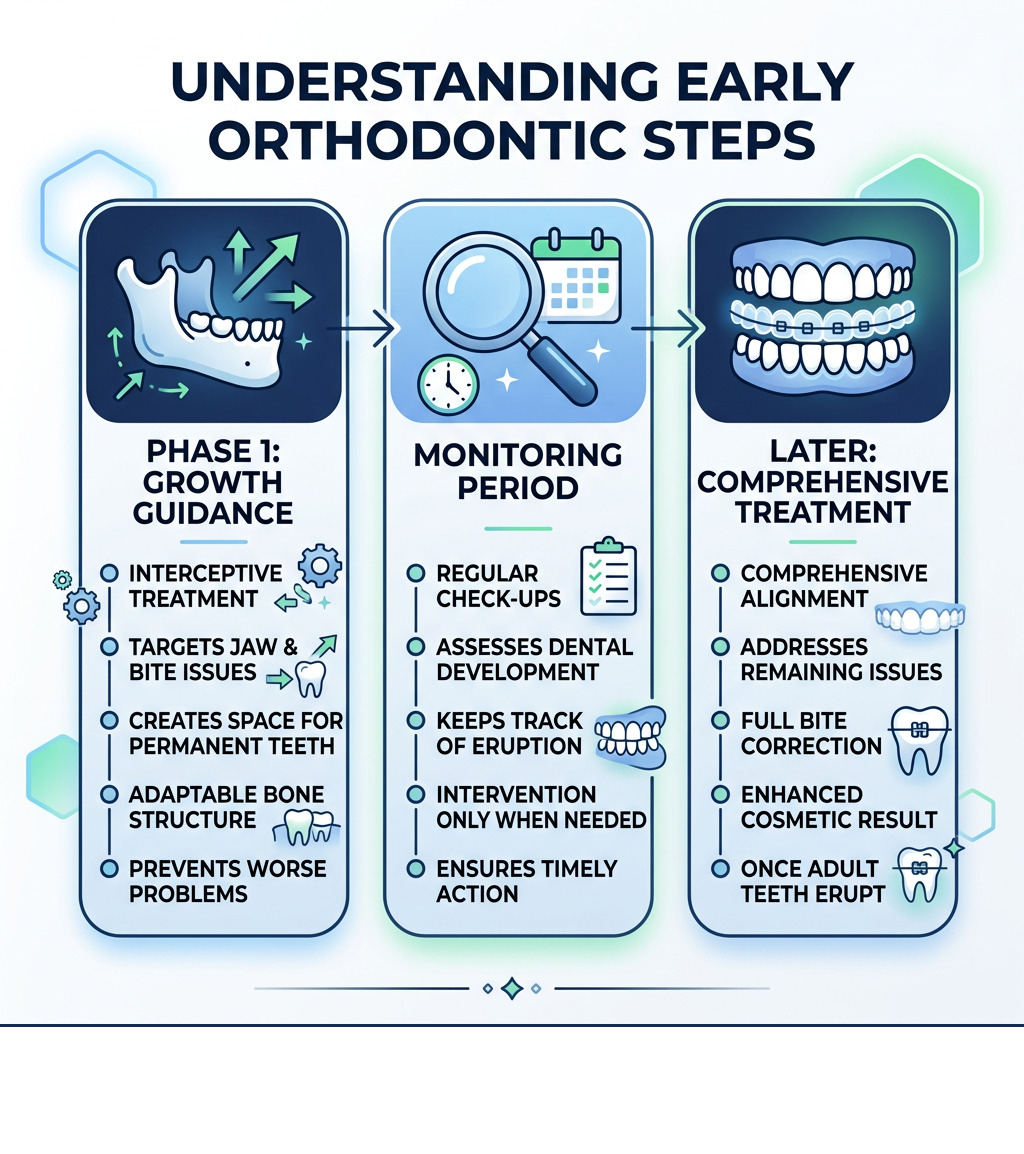
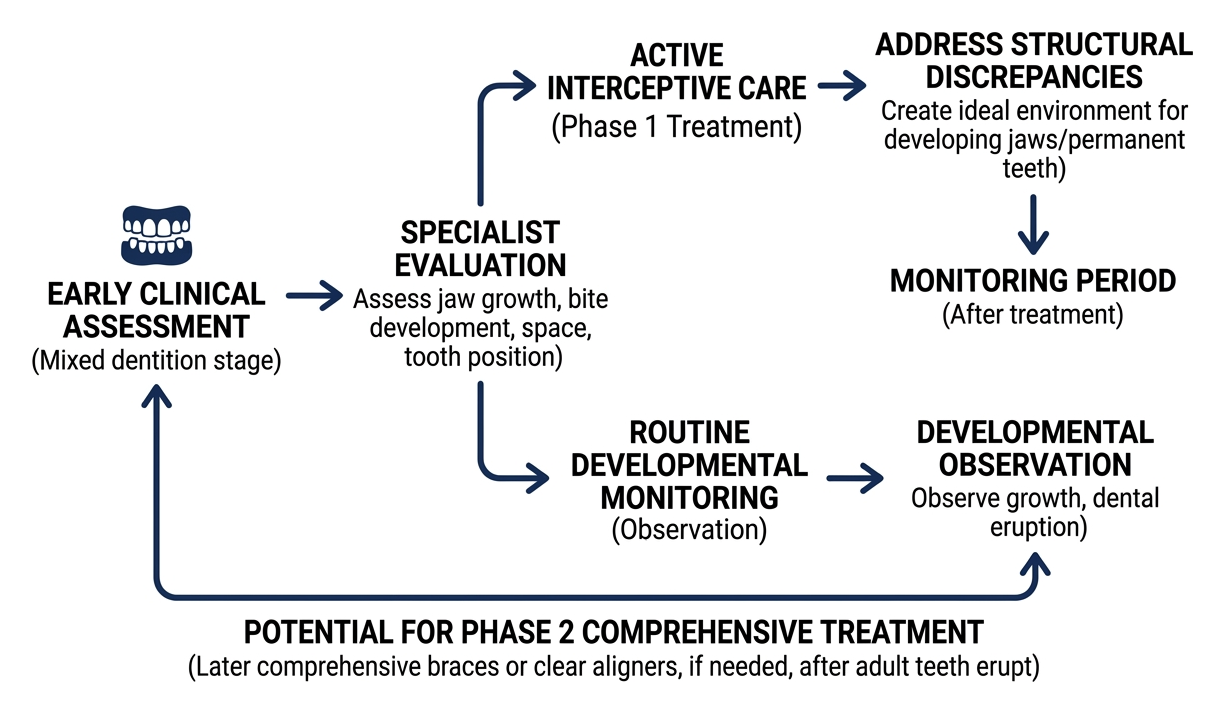
Phase 1 orthodontics is early, targeted treatment during the years when baby and adult teeth are both present. It does not aim to align every tooth. Instead, a specialist orthodontist assesses jaw growth, bite development, space for erupting teeth and the position of front teeth to decide whether early intervention may be useful or whether monitoring is the better option.
Many children need no appliance treatment at this stage. An early orthodontic assessment can identify developing crossbites, crowding, early tooth loss, prominent front teeth or jaw imbalance that may benefit from timely management. Early clinical consultations provide an objective baseline to evaluate facial symmetry and tooth emergence without committing immediately to active therapy.
Phase 1 may involve an expander, a space maintainer, a habit-management appliance or limited braces. If treatment is appropriate, there is usually a monitoring period afterwards, and some children may still need comprehensive braces or clear aligners once more adult teeth have erupted. Interceptive care is designed to create space, harmonize dental arch widths, and guide eruptive pathways while supporting balanced facial growth.
Key Takeaways
- Families considering interceptive monitoring can evaluate developmental timing and review flexible payment options through our pricing guide.
About the Author
I am Dr Nick, a Specialist Orthodontist with 30 years experience assessing growing children and planning Phase 1 orthodontics when it is clinically appropriate. I personally see patients at every appointment, helping families understand whether treatment or observation is the right next step. In my practice, clinical planning relies on thorough clinical examinations and digital modeling to assess skeletal development accurately.
Understanding Phase 1 Orthodontics and How It Works
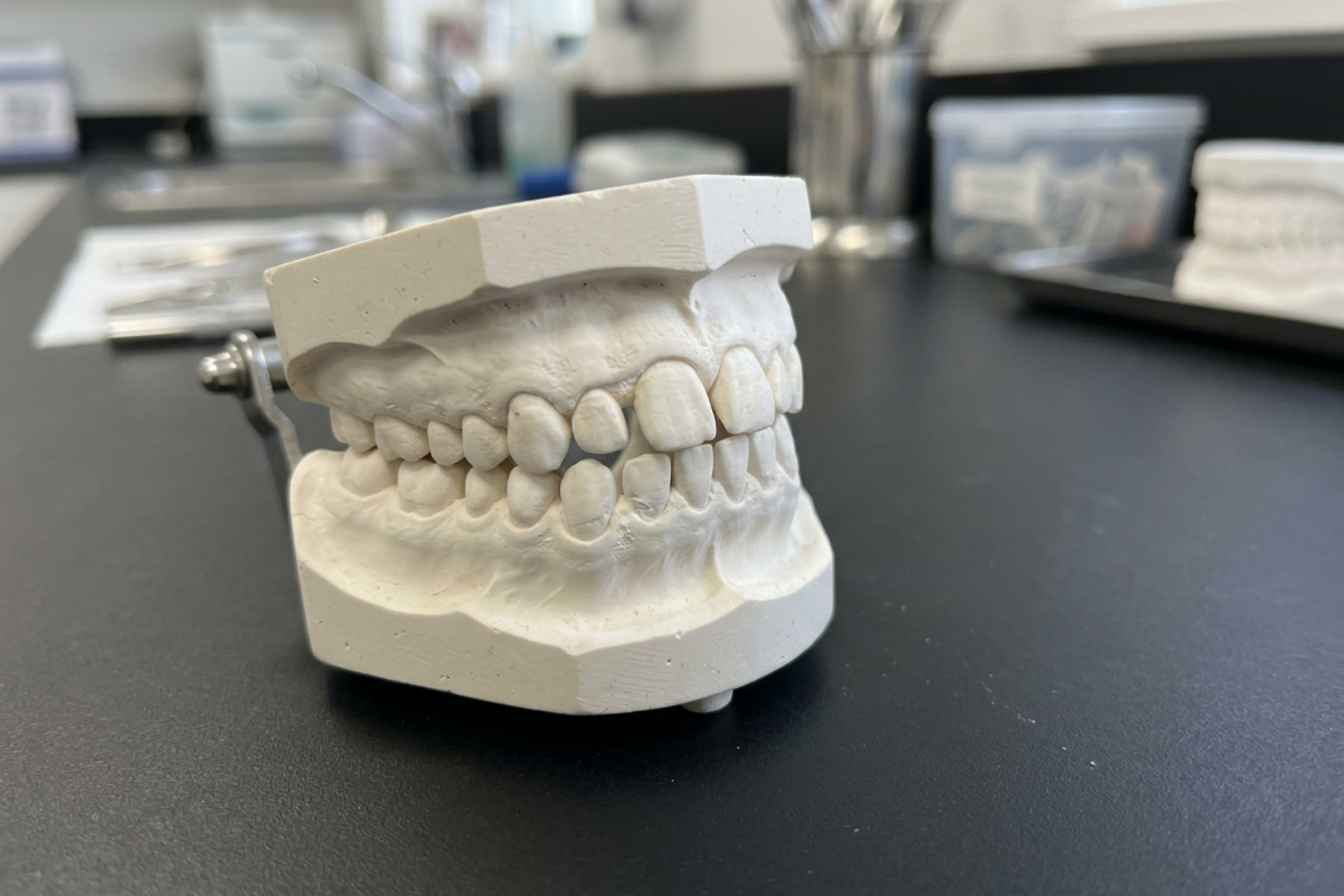
Early interceptive treatment focuses on creating an ideal environment for developing jaws and permanent teeth. Clinical planning often relies on digital modeling to evaluate skeletal relationships in growing children. The primary goal is addressing underlying structural discrepancies before they become more complex. Australian health resources such as Healthdirect note that early intervention aims to guide jaw growth and manage spacing issues as teeth emerge.
Interceptive therapy establishes functional harmony between the upper and lower dental arches. Orthodontists evaluate how the tongue rests, how the lips close, and how the upper jaw aligns with the lower jaw during speech and chewing. Identifying structural discrepancies early helps clinical teams plan selective care only when it offers clear developmental advantages.
| Feature | Phase 1 Interceptive Care | Phase 2 Comprehensive Treatment |
|---|---|---|
| Dental Stage | Mixed dentition (baby and adult teeth) | Full permanent dentition (adolescence) |
| Primary Goal | Skeletal balance, jaw width, and space creation | Complete alignment, detailing, and root positioning |
| Appliances | Expanders, partial braces, space maintainers | Full fixed braces or clear aligners |
| Treatment Focus | Guiding jaw growth and eruption paths | Establishing final functional bite and aesthetics |
How Phase 1 Orthodontics Differs from Phase 2
Phase 1 orthodontics modifies jaw structure and arch form during mixed dentition. Comprehensive Phase 2 care occurs later, typically once all permanent teeth have erupted.
Parents exploring orthodontic options can find detailed insights through our interceptive care guidance. Interceptive therapy sets the structural foundation, which can streamline any necessary future orthodontic work. Phase 1 creates arch perimeter, addresses severe bite mismatches, and prevents developing impactions, whereas Phase 2 focuses on precision alignment of every individual tooth and root.
Common Dental and Skeletal Issues Treated Early
Early therapy targets specific developmental concerns that benefit from early management. Clinical presentations that may indicate interceptive intervention include:
- Posterior crossbites, where the upper back teeth bite inside the lower teeth.
- Anterior crossbites, where one or more upper front teeth sit behind the lower front teeth.
- Severe dental crowding that prevents normal tooth eruption.
- Excessive overjet, which can increase the vulnerability of front teeth to physical injury.
- Developing open bites or deep bites associated with growth variations or prolonged oral habits.
- Asymmetric jaw growth patterns caused by functional shifts on closure.
Early Developmental Assessments and Growth Guidance
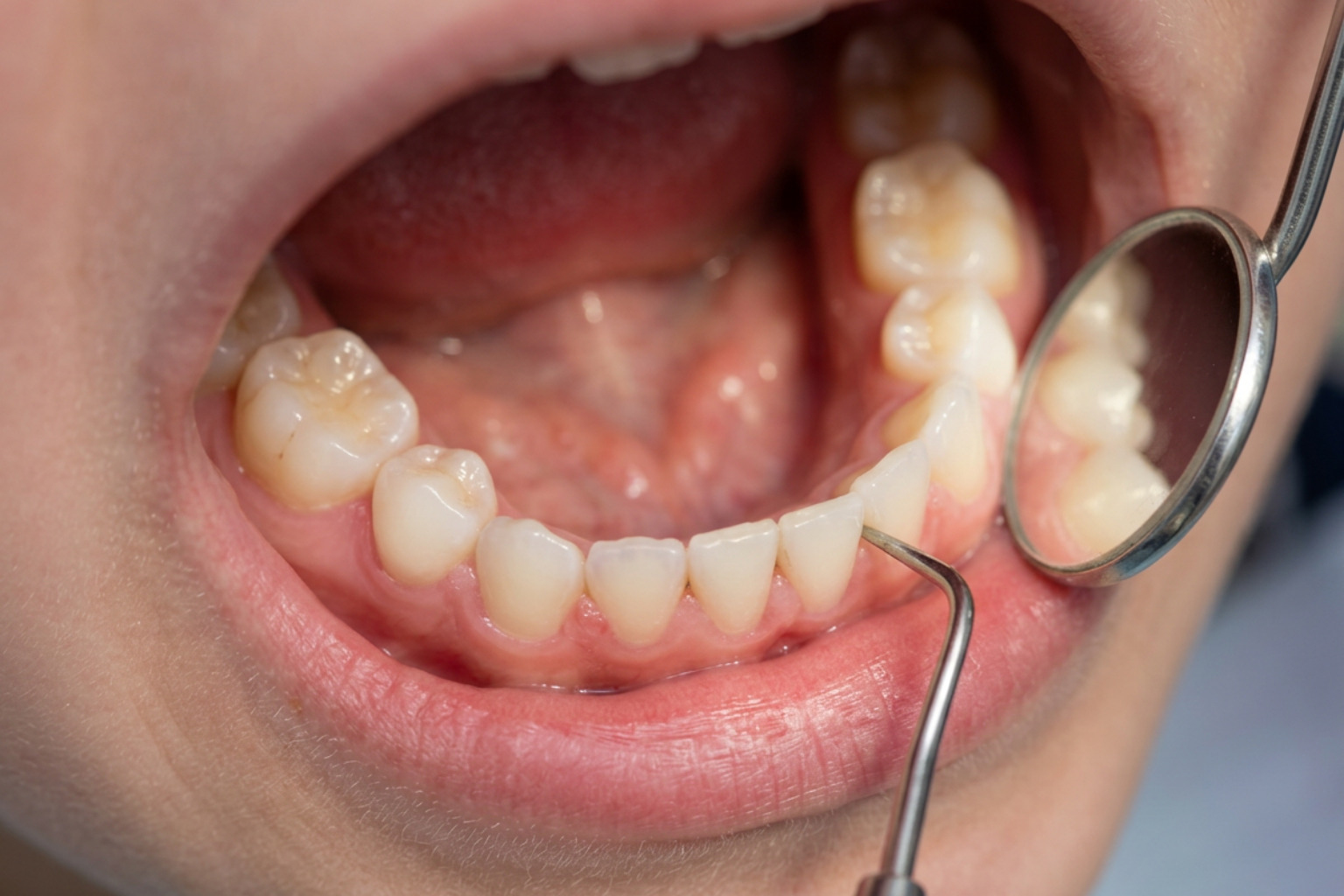
Evaluating children during early mixed dentition allows a specialist orthodontist to examine the relationship between the first permanent molars and incisors. At this stage of development, the bones of the upper jaw remain adaptable, which allows expansion appliances to guide arch width effectively. Early assessments provide a comprehensive baseline of craniofacial growth patterns, identifying skeletal imbalances before dental compensation obscures the underlying structure.
Orthodontists use these early clinical visits to observe how the upper and lower jaws relate to each other in three dimensions. Assessing transversal width, sagittal relationships, and vertical overlap gives clear insight into how the face and teeth are maturing over time.
Indications for Phase 1 Orthodontics in Growing Children
A targeted evaluation helps detect subtle developmental irregularities. Signs that may warrant active Phase 1 care include ectopic tooth eruption, where a tooth emerges off its normal path. Premature loss of primary molars can also lead to space loss if left unmanaged.
Clinical indicators also include unilateral posterior crossbites with a lateral mandibular shift, which can lead to asymmetric facial growth if unaddressed. Significant anterior crossbites that may cause localized gum recession on lower incisors or severe overjets that leave prominent front teeth exposed to traumatic sports injuries are also prime considerations for early care.
Monitoring Mixed Dentition and Bone Development
Most young patients do not require immediate orthodontic appliances after their initial assessment. Placing a child on an active recall schedule allows ongoing tracking of tooth emergence and facial growth patterns. Digital modeling for clinical planning assists in determining whether treatment is necessary or if natural growth remains on track. Recall appointments scheduled at regular developmental intervals ensure that if interceptive care becomes necessary, it is initiated at the most effective developmental stage.
Common Early Appliances and Treatment Approaches
Appliances selected for Phase 1 care are specifically tailored to the child’s developmental requirements. Proper oral hygiene and appliance maintenance are essential components of any early interceptive plan. Every appliance design is customized after detailed digital modeling for clinical planning to address specific dental or skeletal needs.
Palatal Expanders and Space Maintainers
A rapid palatal expander widens a narrow upper jaw to resolve posterior crossbites and create arch perimeter. Widening the maxillary arch can correct functional shifts, relieve severe anterior crowding, and improve tongue posture. Space maintainers preserve room for underlying permanent premolars when baby teeth are lost prematurely, preventing neighboring molars from tipping forward and blocking the eruption path of adult teeth.
Fixed space maintainers remain bonded in place until the adult teeth begin emerging through the gum tissue. Removable retainers or space maintainers are occasionally used when multiple primary teeth have been lost across different quadrants.
Limited Braces and Clear Aligners
Limited braces, often referred to as a 2×4 appliance, place brackets on the first permanent molars and four front incisors to correct severe rotations or crossbites. These targeted setups align incisors into intended positions without placing appliances on deciduous baby teeth that will soon shed. Pediatric clear aligners may also be considered in select cases to align crowded anterior teeth, expand arch form, and manage mild spacing discrepancies in cooperating young patients.
Regardless of the appliance used, regular checkups allow the orthodontist to monitor tooth movement, assess oral hygiene, and make adjustments as the child continues to grow.
Your Next Step with Dr Nick
Dr Nick has guided families through early orthodontic assessments for more than 30 years across Chermside and greater Brisbane, treating over 11,500 patients with a commitment to personalized clinical care. Every patient is seen directly by Dr Nick at every visit, ensuring consistent monitoring throughout every stage of development. If you would like to assess your child’s dental development, please book a consultation with our team today.
Frequently Asked Questions
Does every child evaluated during early mixed dentition need early braces?
No, the vast majority of children evaluated at this developmental stage require observational monitoring rather than active treatment. Routine recall appointments allow us to track jaw growth and ensure teeth are erupting normally. Clinical evaluations during mixed dentition are primarily preventive, designed to establish a growth baseline and intervene only when clear structural benefits exist.
Can early orthodontic treatment address mouth breathing or airway concerns?
Orthodontic expanders widen the upper dental arch and may increase the floor of the nasal cavity. Orthodontists manage structural dental relationships and work alongside medical practitioners, such as Ear, Nose, and Throat specialists, when airway symptoms are present. Expanding a constricted palate may assist nasal airflow in select cases, but comprehensive management of breathing disorders requires medical diagnosis and interdisciplinary care.
Will a child still need comprehensive treatment during their teenage years?
Many children who complete Phase 1 therapy may benefit from a second phase of comprehensive braces or clear aligners once all adult teeth emerge. Phase 1 establishes skeletal balance and arch space, while Phase 2 completes final detailing and tooth alignment. Interceptive care can help reduce the complexity of subsequent adolescent treatment by addressing major skeletal and spatial discrepancies early.


