

Early Treatment for Underbite Can Guide Growing Jaws
If your child’s lower front teeth sit in front of their upper teeth, early treatment for an underbite may be worth discussing with a Specialist Orthodontist. For families in Brisbane and North Brisbane, I assess whether the bite relates mainly to tooth position, jaw growth, or both, then explain whether treatment or monitoring is appropriate.
Key Takeaways
- An underbite or anterior crossbite should be assessed when the upper and lower front teeth do not meet as expected.
- Early care may be considered when tooth position or jaw development is affecting the bite.
- A detailed assessment helps distinguish a dental underbite from a skeletal jaw relationship.
- Monitoring can be appropriate when active treatment is not clinically indicated.
- You can review treatment and pricing information before your consultation.
About the Author
I am Dr Nick, a Specialist Orthodontist with more than 30 years of experience assessing developing bites in children. I personally see every patient at every visit, and I use detailed clinical records and digital modelling for clinical planning to help families understand their child’s bite and the options that may be suitable.
Understanding Underbites and Class III Malocclusion
An underbite describes a bite where the lower front teeth sit ahead of the upper front teeth when the mouth closes. It may involve one or more teeth, the relationship between the upper and lower jaws, or both. You can also read my overview of a Class III bite.
The upper jaw and lower jaw do not always grow at the same pace. When the upper jaw develops less prominently, the lower jaw grows more prominently, or the front teeth are tipped, an altered bite relationship can develop.
| Bite characteristic | Dental underbite | Skeletal underbite |
|---|---|---|
| Primary cause | Tipped or misaligned front teeth | Difference in jaw size or jaw position |
| Facial profile | Jaw relationship may appear balanced | Upper jaw may appear less prominent or lower jaw more prominent |
| Bite relationship | Front teeth may meet edge to edge or in crossbite | Lower jaw remains forward relative to the upper jaw |
| Clinical focus | Tooth movement with a removable appliance or limited braces may be considered | Growth guidance, monitoring, and longer-term planning may be discussed |
What Defines an Anterior Crossbite
An anterior crossbite occurs when one or more upper front teeth bite behind the lower front teeth. This can create a negative overjet and may change the way the teeth contact during chewing.
I assess whether the crossbite is linked to tooth position, a functional jaw shift, or jaw growth. That distinction helps guide the advice I give to families.
Dental vs Skeletal Bite Discrepancies
A dental crossbite relates mainly to the position and angle of the teeth on otherwise balanced jaw bases. A skeletal Class III relationship involves the position or size of the upper and lower jaws.
Clinical records and radiographs, when indicated, help me distinguish between these presentations. This supports a treatment plan that reflects your child’s individual development.
Why Early Treatment for Underbite Matters in Growing Children
Early assessment can clarify whether a developing underbite needs active care or observation. When treatment is clinically suitable, it may focus on tooth position, upper-arch width, or the way the jaws meet.
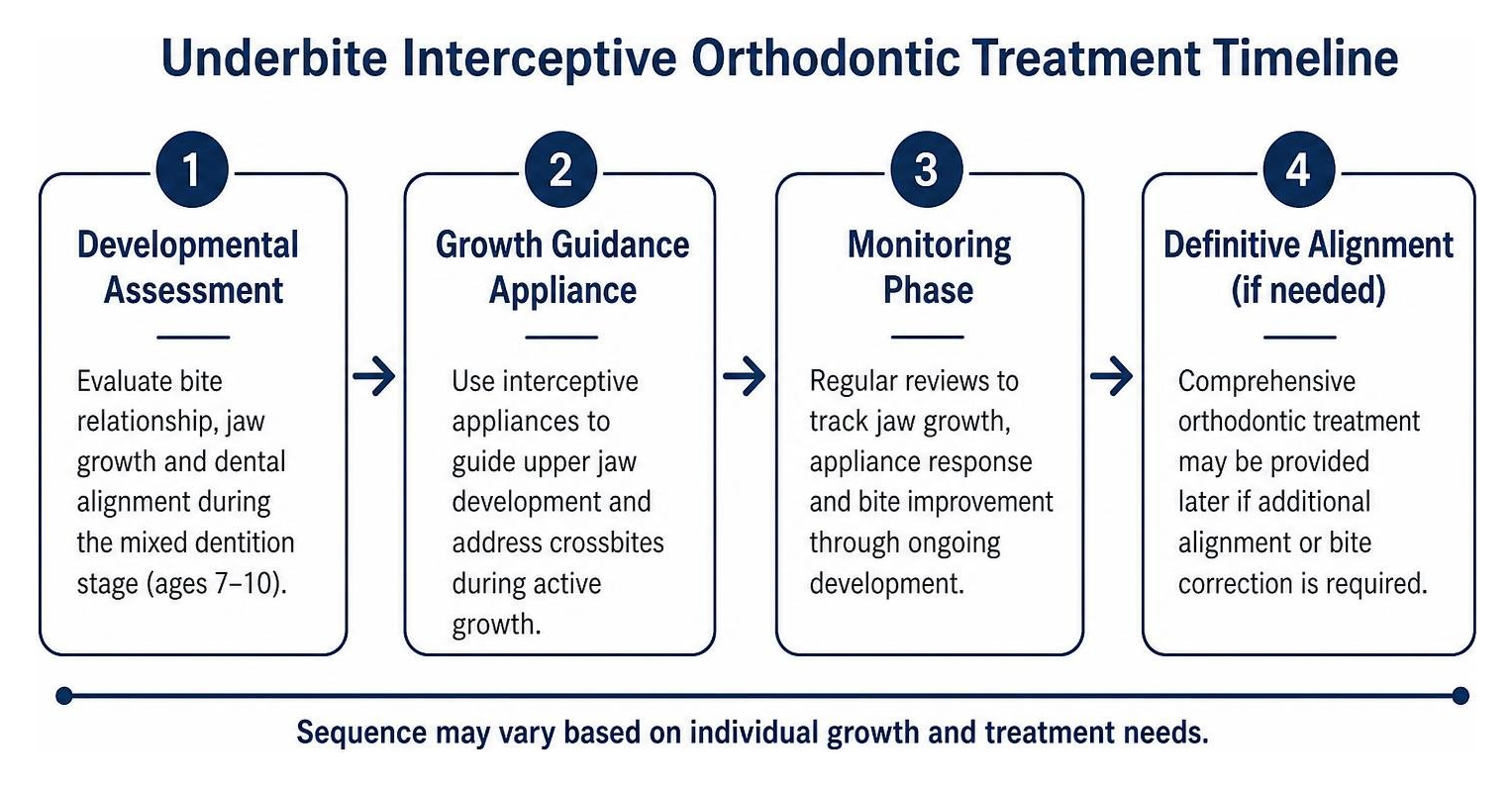
I look at each child’s facial balance, bite contacts, jaw movement, and eruption pattern. This approach helps me explain what I am seeing in plain language and whether treatment may be helpful at this stage.
When an Assessment May Be Helpful
An assessment may be useful when you notice the lower front teeth sitting ahead of the upper teeth, an uneven bite, or a change in how your child closes their mouth. A consultation does not automatically mean treatment will start.
In some cases, I recommend monitoring growth and tooth eruption before making any active changes. In others, an interceptive appliance or limited braces may be discussed.
Clinical Assessment for an Underbite
I assess jaw movement, facial symmetry, tooth eruption, and the contacts between the upper and lower teeth. Where appropriate, I use digital modelling for clinical planning to examine the bite in detail.
This assessment helps me explain whether the concern appears dental, skeletal, or mixed. It also gives you a clear opportunity to ask questions about the timing and scope of care.
Orthodontic Options for Developing Bites
Early orthodontic care uses appliances chosen for a child’s specific bite and stage of development. The aim is not the same for every child, so I discuss the options only after assessing the underlying cause of the underbite.
Non-Surgical Options for Early Underbite Care
Some developing crossbites may be managed with a removable acrylic plate that guides the front teeth into a more appropriate relationship. Limited fixed braces can also be considered for selected teeth when this suits the clinical findings.
I explain what each option involves, what it is designed to address, and why monitoring may still be the better choice in some situations.
Growth Guidance and Upper Arch Expansion
A narrow upper arch can occur alongside an anterior crossbite. An upper expansion plate may be considered to widen the dental arch and create space where this is clinically appropriate.
The suitability of expansion depends on the bite, tooth eruption, jaw relationship, and your child’s overall development. I will discuss the potential role of this approach during the assessment.
When Further Planning May Be Needed
Some skeletal bite differences have a strong genetic component and can continue to change as a child grows. When a significant discrepancy remains after growth is complete, orthodontic treatment and surgical planning may be discussed as part of adult care.
Ongoing reviews can help families understand how the bite is developing and when further planning may be appropriate.
Long-Term Considerations for Developing Bites
Addressing an anterior crossbite when it is clinically appropriate may help reduce unfavourable contacts on the front teeth. It can also help me monitor how the upper and lower jaws are developing as more adult teeth emerge.
Every child develops differently, so I avoid a one-size-fits-all recommendation. A thoughtful review of the bite can help parents understand whether active care or ongoing observation is the more suitable approach.
Your Next Step with Dr Nick
I have spent more than 30 years helping Brisbane families understand their orthodontic options. At NK Orthodontist in Chermside, I personally see every patient at every appointment and provide clear, transparent advice about what may be appropriate for their child.
Our practice is located at 510 Rode Road, Chermside, with convenient access for North Brisbane families. When you are ready to discuss your child’s bite, book a consultation with Dr Nick.
Frequently Asked Questions
What causes an underbite to develop in young children?
An underbite can develop because of genetic factors, tooth eruption patterns, or a functional shift caused by tooth contacts. The upper and lower jaws may also develop at different rates. I assess the individual factors involved before discussing whether treatment or monitoring is appropriate.
When should a child see an orthodontist about an underbite?
A child should be assessed when the lower front teeth sit ahead of the upper teeth or the bite appears uneven. An early assessment helps identify whether the concern is mainly dental, skeletal, or mixed. It can also confirm whether observation is appropriate at that stage.
Can an underbite change as a child grows?
Yes, an underbite can change as the teeth erupt and the jaws develop. A dental crossbite may change differently from a skeletal jaw relationship. Regular reviews can help track these changes and guide future advice.
What is the difference between a dental and a skeletal underbite?
A dental underbite mainly involves the position or angle of the teeth. A skeletal underbite involves a difference in the relationship between the upper and lower jaws. Clinical records help me identify which factors are contributing to the bite.
Can orthodontic appliances be used for an underbite in children?
Yes, orthodontic appliances may be considered for some children with developing underbites. A removable plate, limited braces, or an expansion appliance may be appropriate depending on the clinical findings. The appliance choice depends on the teeth, jaw relationship, and stage of development.
How long does early underbite care take?
The duration of care varies because the goals and appliances differ from child to child. Some children need a period of active treatment followed by monitoring as the remaining adult teeth emerge. I discuss the expected stages of care after assessing your child’s bite.
How do Brisbane families arrange an assessment?
Brisbane families can arrange an initial consultation with NK Orthodontist in Chermside. During the appointment, I assess your child’s bite, discuss the relevant developmental factors, and explain the options that may be suitable. You will receive clear advice about whether treatment or monitoring is the appropriate next step.


