

Orthodontic Retainer Replacement in Brisbane: What to Do Next
If your retainer is lost, cracked, warped, or no longer fitting properly, I recommend arranging a review with your orthodontic practice. For orthodontic retainer replacement, I first check how your teeth and current appliance are sitting before recommending the next step.
If your retainer still seats fully without force, keep wearing it as advised until I can assess it.
Key Takeaways
- Contact your orthodontic practice if your retainer is lost, cracked, warped, or no longer seats fully.
- Bring any current or older appliance that still fits, so I can assess your tooth positions and the appliance condition.
- Store removable retainers in a rigid case and clean them with cool water to help reduce avoidable damage.
- For appointment, rebate, and payment information, visit our pricing page.
About Dr Nick
I am Dr Nick, a Specialist Orthodontist with longstanding private-practice experience. I personally assess retainer replacement concerns, including appliance fit and current tooth positions, so I can explain the options that suit your circumstances.
Why Replacing a Retainer Matters
Retainers help hold teeth in the positions reviewed after braces or clear aligner treatment. If a retainer is missing or no longer fits, teeth may gradually move because the appliance is no longer providing the same support. Healthdirect Australia explains that retainers help keep teeth in position after orthodontic treatment in its orthodontics information.
I can assess whether your old retainer can still be worn, whether a replacement may be suitable, or whether tooth movement needs to be managed first.
Signs That an Appliance Needs Review
A crack or split in a clear plastic retainer can affect how evenly it sits over the teeth. Please avoid forcing it into place if you can see damage.
Heat can distort a removable retainer. Hot water, direct sunlight, dishwashers, and car dashboards can all change the shape of the plastic.
A loose retainer may mean the material has worn or your tooth positions have changed. If it slips out easily or no longer clicks into place as it once did, I recommend having it checked.
Cloudiness, odour, or plaque that does not clean away can also be a reason for review. Daily cleaning and dry storage in a case may help, though some appliances eventually need replacement.
What Can Happen If You Wait
Teeth may start to move when retainer wear stops. The amount and timing vary between patients, so I prefer to assess the fit rather than make assumptions from photos or symptoms alone.
Changes in tooth position can affect how your upper and lower teeth meet. A replacement made over shifted teeth may hold those changed positions, rather than match your previous alignment.
Please do not force a retainer that no longer fits. I can assess whether a new retainer is suitable or whether another orthodontic step should be discussed first.
Clear Removable and Fixed Retainer Options
Clear removable plastic retainers and fixed wire retainers work differently. I will recommend an option based on your bite, previous treatment, current tooth positions, and how the appliance will be used day to day.
| Retention Feature | Clear Removable Plastic Retainers | Fixed Wire Retainer Behind Lower Front Teeth |
|---|---|---|
| Material construction | Thermoformed clear plastic | Custom-shaped wire bonded with dental resin |
| Visibility | Sits over the teeth and is clear | Sits behind the lower front teeth |
| Wear pattern | Usually worn at night when advised | Worn continuously because it is bonded in place |
| Cleaning | Removed for brushing and flossing | Needs careful cleaning around the bonded areas |
| Main use | Helps support the full arch | Helps support lower front teeth that may be prone to movement |
Clear Removable Plastic Retainers Made In-House
At my practice, we make clear removable plastic retainers in-house using digital records where suitable. These appliances are designed to fit closely over your teeth and support your retention plan.
You remove them for eating, brushing, and flossing. Keeping the retainer in a rigid case is important because many appliances are lost or damaged when wrapped in tissues or carried loosely in a bag.
Replacement may be more straightforward when current digital records are available. If those records are no longer current, I may need a new scan before the appliance is made.
Fixed Wire Retainer Behind Lower Front Teeth
A fixed wire retainer is bonded to the back surfaces of the lower front teeth. It remains in place continuously because you do not remove it at night.
Regular checks matter because the wire or bonding can loosen. If it lifts, feels sharp, or seems different when you run your tongue over it, please arrange a review.
Cleaning around a fixed wire takes extra care. Interdental brushes or floss threaders can help you clean around the bonded areas.
How I Replace Retainers at NK Orthodontist
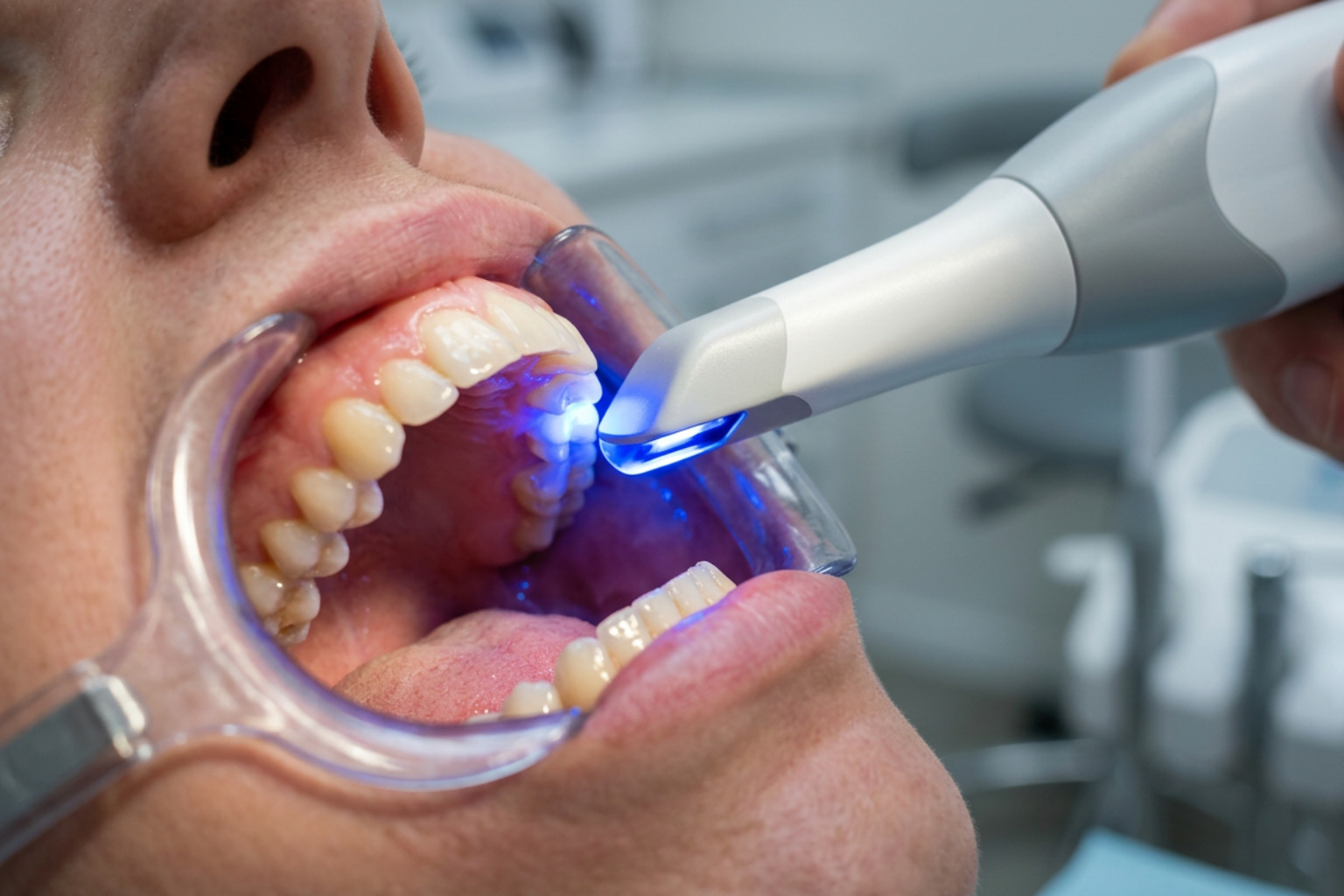
Retainer replacement starts with a clinical review. I check how the appliance fits, whether the teeth appear to have moved, and whether a clear removable or fixed wire option is appropriate.
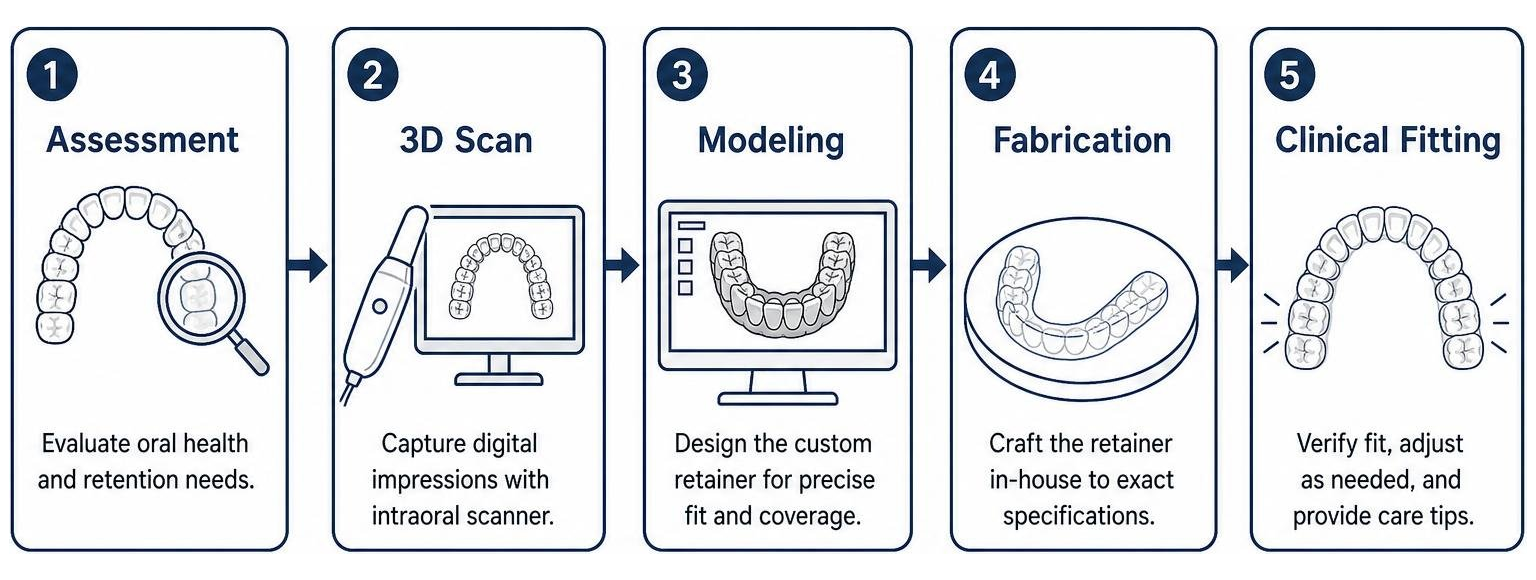
Orthodontic Retainer Replacement Process
My clinic uses 3D intraoral optical scanners to capture a digital model of your dental arches without traditional putty impressions. This digital modelling for clinical planning helps me assess your current tooth positions and plan the appliance fit.
Once I have reviewed the digital records, our laboratory makes the clear appliance to match the approved model. At the fitting visit, I inspect how the appliance seats and whether it places uneven pressure on any area.
If you are replacing a fixed wire retainer, I assess the bonded area and surrounding teeth first. My repair or replacement recommendation depends on what I find during the appointment.
Why an In-Clinic Review Helps
An in-clinic review lets me assess your bite, gum health, appliance wear, and current tooth positions. A retainer needs to match the mouth it is being fitted to.
At-home impression kits can be difficult to use accurately. A distorted impression may mean the appliance does not seat as intended.
I can give you a clearer plan before the retainer is made. If subtle movement has occurred, I can explain the available options before you decide on a replacement.
Caring for Your Replacement Retainer
Proper storage is one of the most useful ways to reduce retainer damage and loss. Place a removable retainer in a rigid, ventilated case whenever it is not in your mouth.
Keep retainers away from heat, including hot tap water, dishwashers, and car dashboards. Clean them with a soft toothbrush and cool water or an approved retainer-cleaning product.
Replacement Retainer Fees and Health Fund Questions
Replacement fees depend on the retainer type, the records needed, and whether the appliance is removable or fixed. I can explain the relevant payment information during your appointment.
Some Australian private health insurance extras policies may provide a rebate for orthodontic appliances. Cover varies between funds and policies, so it is best to check your own health fund using the itemised information we provide.
Your Next Step with Dr Nick
If your retainer is lost, broken, warped, or no longer fitting, I recommend arranging a review at my Chermside practice, at 510 Rode Road, serving Brisbane and North Brisbane. I will assess the appliance, check your current tooth positions, and explain whether replacement is suitable.
I have more than 30 years of specialist orthodontic experience and have treated more than 11,500 patients. I take a transparent approach, so you can understand what I am assessing and why I am recommending a particular next step.
When you are ready, you can book a consultation.
Frequently Asked Questions
What should I do if my replacement retainer feels too tight?
Do not force it onto your teeth. A tight feeling may mean some tooth movement has occurred while you were without an appliance, so please contact the clinic for an assessment. I can explain whether an adjustment, replacement, or further orthodontic discussion is appropriate.
How quickly should I replace a lost retainer?
Contact your orthodontic practice when you realise the retainer is missing. Teeth may gradually move when retention stops, though the timing varies between patients. If an older aligner or retainer still fits without force, bring it to your appointment so I can assess it.
Can I wear an old retainer until my appointment?
You may be able to wear an old retainer if it seats fully and does not need force. Stop wearing it if it feels painful, distorted, or no longer fits properly. Bring it with you so I can check whether it is helping or whether it should be replaced.
Can a warped retainer be repaired?
A warped removable retainer will often need replacement because heat can change the appliance shape. Please do not try to bend it back yourself. I can assess the fit and let you know whether a new scan or updated record is needed.
Does private health insurance cover replacement retainers in Australia?
Some Australian private health insurance extras policies may provide a rebate for orthodontic appliances. Cover varies between funds, policies, and waiting periods. We provide itemised information so you can check directly with your health fund.
Should I choose a clear removable retainer or a fixed wire retainer?
The right option depends on your current tooth positions, previous treatment, and retention needs. Clear removable plastic retainers and fixed wire retainers work differently, so I assess your mouth before recommending an option. If you already have one type, I can also explain whether continuing with it is suitable.


