

What Are the Main Types of Braces?
Each type works by applying consistent pressure to move teeth gradually into alignment. The right choice depends on case complexity, lifestyle, and how much visibility matters to you.
Key Takeaways
- Most orthodontic treatments may be completed within a timeframe of 12 to 36 months.
- Specialist orthodontists recommend children receive an initial assessment by age 7 to monitor jaw development.
- Clear aligners typically require a commitment of 22 hours of daily wear to remain effective.
- Modern metal brackets are approximately 30 percent smaller and more streamlined than historical versions.
- Retainers are necessary for long-term stability following the completion of any active treatment.
Types of braces available today fall into five main categories:
| Type | Visibility | Removable? |
|---|---|---|
| Traditional metal braces | Most visible | No |
| Ceramic (clear) braces | Less visible | No |
| Self-ligating braces | Varies (metal or ceramic) | No |
| Lingual braces | Invisible from front | No |
| Clear aligners (e.g., Invisalign, Spark) | Nearly invisible | Yes |
Choosing between orthodontic options is rarely straightforward. Metal, ceramic, lingual, self-ligating, and clear aligners each suit different needs, budgets, and lifestyles. Some are fixed to your teeth; others are removable. Some are virtually invisible; others are built for precision in complex cases. And the type that worked well for your colleague or your child’s friend may not be the right fit for you.
This guide explains how each type works, what it is best suited for, and what to expect during treatment.
I am Dr Nick, a Specialist Orthodontist with over 30 years of experience and founder of NK Orthodontist in Brisbane, where I have personally treated more than 11,500 patients across all types of braces. In the sections ahead, I will walk you through everything you need to make an informed decision before your first consultation.
The Biological Process of Moving Teeth
Straightening teeth is not just a mechanical process; it is a biological one known as bone remodelling. When we apply constant, gentle pressure to a tooth, it creates tension on one side of the periodontal ligament and compression on the other. This signals the body to send specialised cells called osteoclasts to dissolve bone where the tooth is moving and osteoblasts to build new bone behind it.
To facilitate this, modern orthodontics utilises advanced materials like Nitinol alloys. These nickel-titanium wires, originally developed by NASA, possess “shape memory.” They can be flexible when cool but become firm and exert steady force when heated to body temperature. This allows for more consistent movement compared to the rigid stainless steel wires used in the past. Understanding how dental braces work helps patients appreciate why consistent pressure, rather than excessive force, is the key to successful alignment.
Understanding the Different Types of Braces
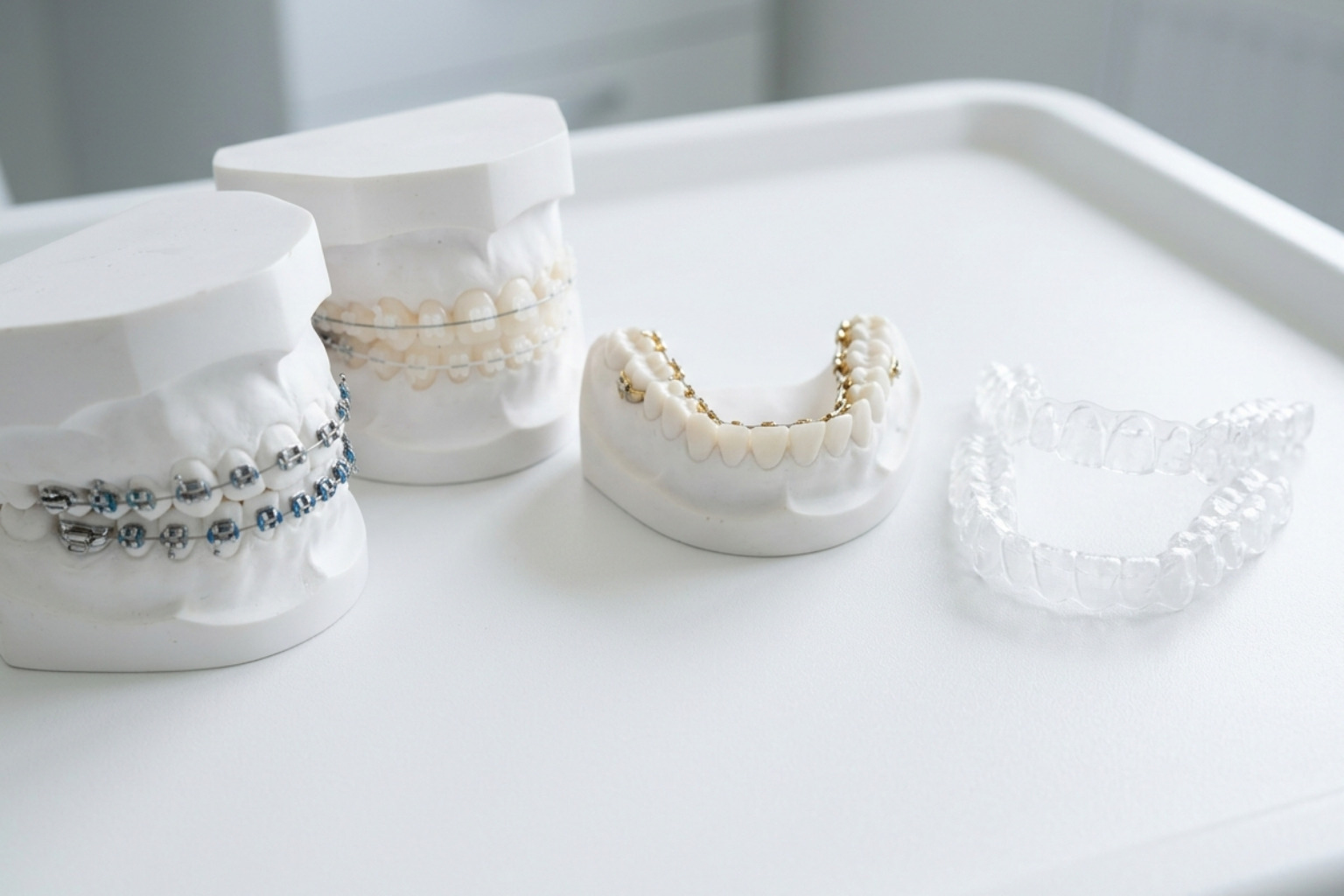
When we evaluate a patient at our Brisbane clinics in Chermside or Spring Hill, we look for malocclusions, which are variations in how the teeth and bite fit together. To address these, we use digital modelling and clinical planning to determine which hardware will be most effective.
While many people think of “braces” as just the metal brackets, the term covers a broad range of fixed and removable appliances. A comparison of brace types shows that while the goal is the same, the method of delivery varies significantly between systems.
Traditional Metal Types of Braces
Traditional metal braces remain a highly reliable option for many Brisbane families. These are constructed from high-grade stainless steel and consist of small brackets bonded to each tooth. An archwire is then threaded through the brackets to guide the movement.
To hold the wire in place, we use tiny elastic bands known as ligatures or o-rings. These come in a variety of colours, which children often enjoy choosing during their adjustment appointments. These braces are known for their durability and the high level of precision control they offer the orthodontist. More info about fixed braces can help you decide if this classic approach fits your needs.
Ceramic and Aesthetic Types of Braces
For those who prefer a more discreet appearance, ceramic braces are a popular choice. These function identically to metal braces but use brackets made from polycrystalline alumina or similar tooth-coloured materials. Because they blend in with the natural shade of the teeth, they are much less noticeable from a distance.
These are frequently chosen by adult professionals in Brisbane who require the precision of fixed appliances without the high visibility of metal. It is important to note that while the brackets themselves do not stain, the clear ligatures can discolour if you consume certain foods like turmeric or coffee. You can learn more in The Complete Guide to Invisible Braces.
Modern Alternatives to Fixed Appliances
The orthodontic field has evolved to offer systems that prioritise both efficiency and ease of hygiene. These modern alternatives include both removable trays and fixed systems that eliminate the need for traditional elastic ties.
Clear Aligner Systems
Clear aligners, such as Spark aligners and Invisalign, represent a significant shift in how we move teeth. Instead of brackets and wires, these systems use a series of custom-made, thermoformed plastic trays. Each tray in the sequence moves the teeth a fraction of a millimetre closer to the final position.
Because they are removable, patients can eat and clean their teeth without the obstacles of fixed hardware. However, success depends entirely on cooperation, as the trays must be worn for 22 hours a day. More info about clear aligners explains how digital planning allows us to map out these sequential movements with high accuracy.
Self-Ligating Braces
Self-ligating braces look similar to traditional metal braces but use a specialised clip or “slide mechanism” instead of elastic o-rings to hold the archwire. This design may reduce the friction between the wire and the bracket, allowing the teeth to move more freely.
One of the practical benefits of this system is clinical efficiency. Because there are no elastics to replace, appointment times are often shorter, and the intervals between visits can sometimes be extended. This can be a helpful feature for busy families or patients who prefer less time in the orthodontic chair.
Factors Influencing Treatment Selection
Choosing the right types of braces involves more than just picking the one that looks best. Case complexity is the primary factor; for example, severe bite corrections may be more effectively managed with fixed braces rather than clear aligners.
Patient age and biology also play a role. Children and teenagers often have higher jaw malleability, which can sometimes lead to faster movement. In contrast, adult bone density is higher, which may necessitate a different clinical approach. Lifestyle requirements, such as playing wind instruments or contact sports, will also influence the recommendation. For those considering the financial aspect, information on treatment pricing provides a starting point for understanding how different systems are structured.
Maintaining Oral Health and Stability
Regardless of the types of braces you choose, maintaining oral hygiene is paramount. Fixed appliances require the use of soft-bristled brushes and interdental cleaning tools to reach around brackets and under wires. Dietary adjustments are also necessary to avoid hard or sticky foods that could damage the hardware.
Once the active phase of treatment is finished, the work is not quite over. Teeth have a natural tendency to shift back toward their original positions. To prevent this, we provide retainers, such as Hawley (wire and acrylic) or Essix (clear plastic) styles. Wearing retainers as prescribed is the only way to ensure long-term stability. You can find more details on our Frequently asked questions page.
Your Next Step with Dr Nick
At NK Orthodontist, we believe that every patient deserves the direct attention of an experienced specialist. Dr Nick has over 30 years of experience and has personally treated more than 11,500 patients in the Brisbane community. Whether you visit our Chermside or Spring Hill location, you will see Dr Nick at every single appointment. We have a strict no-delegation policy, meaning your treatment is never handed off to an assistant or junior clinician.
We pride ourselves on transparent, all-inclusive pricing and flexible, interest-free payment plans. Our goal is to make specialist orthodontic care accessible and straightforward for all families. If you are ready to discuss which types of braces are suitable for your needs, the first step is a clinical evaluation. Book a consultation with Dr Nick today to begin your clinical assessment.
Frequently Asked Questions
How long do I need to wear braces?
The duration of treatment depends on the complexity of the dental alignment and individual biological response. Most patients wear appliances for approximately 18 to 24 months. While some minor adjustments may be completed in 12 months, more complex cases involving significant bite correction can take up to three years. Dr Nick will provide a more specific timeframe after reviewing your initial diagnostic records.
Do braces cause pain?
Patients may experience some mild sensitivity for a few days following the initial fitting or regular adjustments. This sensation is a normal part of the teeth beginning to move into new positions and typically feels like a dull pressure. Over-the-counter paracetamol is often sufficient to manage this temporary discomfort while your mouth adjusts to the new appliances. Using orthodontic wax can also help if any part of the hardware feels rough against your cheeks.
What is the best age for an orthodontic assessment?
Specialist orthodontists generally recommend that children have their first assessment between the ages of 7 and 9. This timing allows Dr Nick to monitor the eruption of permanent teeth and the development of the jaw while the child is still growing. Early intervention can sometimes simplify future treatment needs or help guide the growth of the jaw to create space for adult teeth. Most children will not start active treatment until they are between 11 and 14, but early monitoring is key.
Can I play sports with braces?
It is possible to continue playing most sports while undergoing orthodontic treatment. Wearing a custom-fitted mouthguard is essential to protect both the teeth and the orthodontic hardware from impact during physical activity. This precaution helps prevent soft tissue injuries to the lips and cheeks that can occur if the braces are pushed against them during contact. Dr Nick can discuss the best type of mouthguard for your specific appliance.
Are clear aligners as effective as fixed braces?
Clear aligners are highly effective for a wide range of alignment issues when worn according to clinical instructions for at least 22 hours per day. Modern aligner technology can handle many complex cases that were previously only treatable with fixed brackets. However, fixed braces may still be recommended for specific complex vertical movements or severe bite corrections. Dr Nick determines the most suitable option during the initial clinical planning phase based on your unique dental structure.
How often are adjustments required?
Appointments for tightening or progress checks typically occur every four to eight weeks. These visits allow the specialist orthodontist to activate the archwires, check the progress of tooth movement, or provide the next series of clear aligner trays. Regular attendance at these appointments is necessary to keep the treatment plan on schedule and ensure the teeth are moving safely. If a bracket becomes loose between appointments, it is important to contact the clinic promptly.
What foods should I avoid with fixed braces?
Patients should avoid hard, crunchy, or very sticky foods that can dislodge brackets or bend archwires. Examples include popcorn, hard lollies, ice, and chewy caramels, which are known for causing breakages. It is also helpful to cut firm foods like apples, crusty bread, or carrots into smaller pieces rather than biting into them directly. Maintaining these dietary adjustments helps prevent emergency repair appointments and keeps your treatment timeline on track.
Do I need a referral to see Dr Nick?
A referral from a general dentist is not required to book an assessment with a specialist orthodontist. Many families choose to contact the practice directly when they notice signs of crowding, spacing, or alignment variations in their children or themselves. Dr Nick provides a comprehensive evaluation to determine if and when treatment should begin. We are happy to coordinate with your regular dentist to ensure your overall oral health is maintained throughout the process.


