

Invisible Braces Children: What Parents Need to Know
If you are considering invisible braces for your child, the main question is whether clear aligners suit their developing teeth, bite and everyday routine. I assess these details before recommending an appliance, because removable aligners work best when a child is ready to wear and care for them consistently.
Key Takeaways
- Arrange an assessment with a specialist orthodontist to discuss whether clear aligners or fixed braces suit your child’s dental development.
- Consider whether your child can follow the daily routine needed to wear, store and clean removable aligners.
- Clear aligners may make brushing and flossing more straightforward because they are removed for oral hygiene.
- Ask which appliance best fits your child’s bite, lifestyle and level of responsibility.
I am Dr Nick, a Specialist Orthodontist with more than 30 years in practice and more than 22 years of experience with clear aligners. I personally see families at each appointment in Chermside, so I can help you weigh up whether clear aligners or fixed braces fit your child’s needs and routine.
Understanding Clear Aligners for Children
Invisible Braces Children: A Parent-Friendly Explanation
Clear aligners are custom-made plastic trays that fit over the teeth and guide planned movements in stages. For children, the treatment plan needs to account for baby teeth, emerging adult teeth and ongoing jaw growth.
I use digital scans and digital modelling for clinical planning to assess the bite, available space and the movements that may be appropriate. For a general Australian overview, you can also read Healthdirect’s information on orthodontic treatments. This helps me explain the options in practical terms before treatment begins.
How Clear Aligners Can Support Developing Teeth
Early orthodontic treatment may be appropriate when I identify concerns such as crowding, crossbites or limited space for emerging adult teeth. In some cases, clear aligners can support planned tooth movement as a child grows.
Not every child needs active treatment straight away. Monitoring dental development can be the most appropriate option when the bite is still changing and there is no immediate reason to begin.
When Should a Child Have an Orthodontic Assessment?
An orthodontic assessment is often useful once the first adult teeth begin to emerge. It gives me an opportunity to review how the teeth and jaws are developing and to discuss whether monitoring or treatment is appropriate.
Clear aligners may be suitable for some younger children when early intervention is indicated. The decision depends on dental maturity, the bite, the treatment objectives and your child’s ability to manage a removable appliance.
Clear Aligners and Fixed Braces for Children
Choosing between clear aligners and fixed braces involves more than appearance. I look at the tooth movements needed, your child’s dental development and how easily the appliance will fit into family life.
| Feature | Clear Aligners | Fixed Braces |
|---|---|---|
| Appliance type | Removable clear plastic trays | Brackets and wires fixed to the teeth |
| Visibility | Less noticeable in day-to-day life | Brackets and wires remain visible |
| Daily routine | Removed for meals and toothbrushing, then replaced | Remain in place throughout treatment |
| Food choices | Aligners are removed before eating | Some foods may need to be avoided to reduce breakages |
| Cleaning | Teeth can be brushed and flossed without brackets in place | Cleaning around brackets and wires needs extra care |
You can explore the options I offer on our services page.
Matching the Appliance to Your Child’s Needs
Fixed braces may be appropriate for more complex tooth movements or when a child is likely to misplace aligners. Clear aligners may suit children with certain spacing, crowding or bite concerns who can wear them as directed.
A consultation is the best place to make this comparison. I can review the clinical details and explain why one approach may be more suitable than another.
Oral Hygiene and Everyday Care
Clear aligners come out for brushing and flossing, which can make an established oral hygiene routine easier to maintain. They need to be rinsed and kept in their case whenever they are not being worn.
Fixed braces need careful brushing around brackets and wires. I show families how to clean effectively and discuss the habits that can help protect teeth and gums during orthodontic care.
Children using aligners should brush their teeth after eating before putting the trays back in. This helps reduce the chance of food and sugars remaining against the teeth.
Daily Life With Clear Aligners
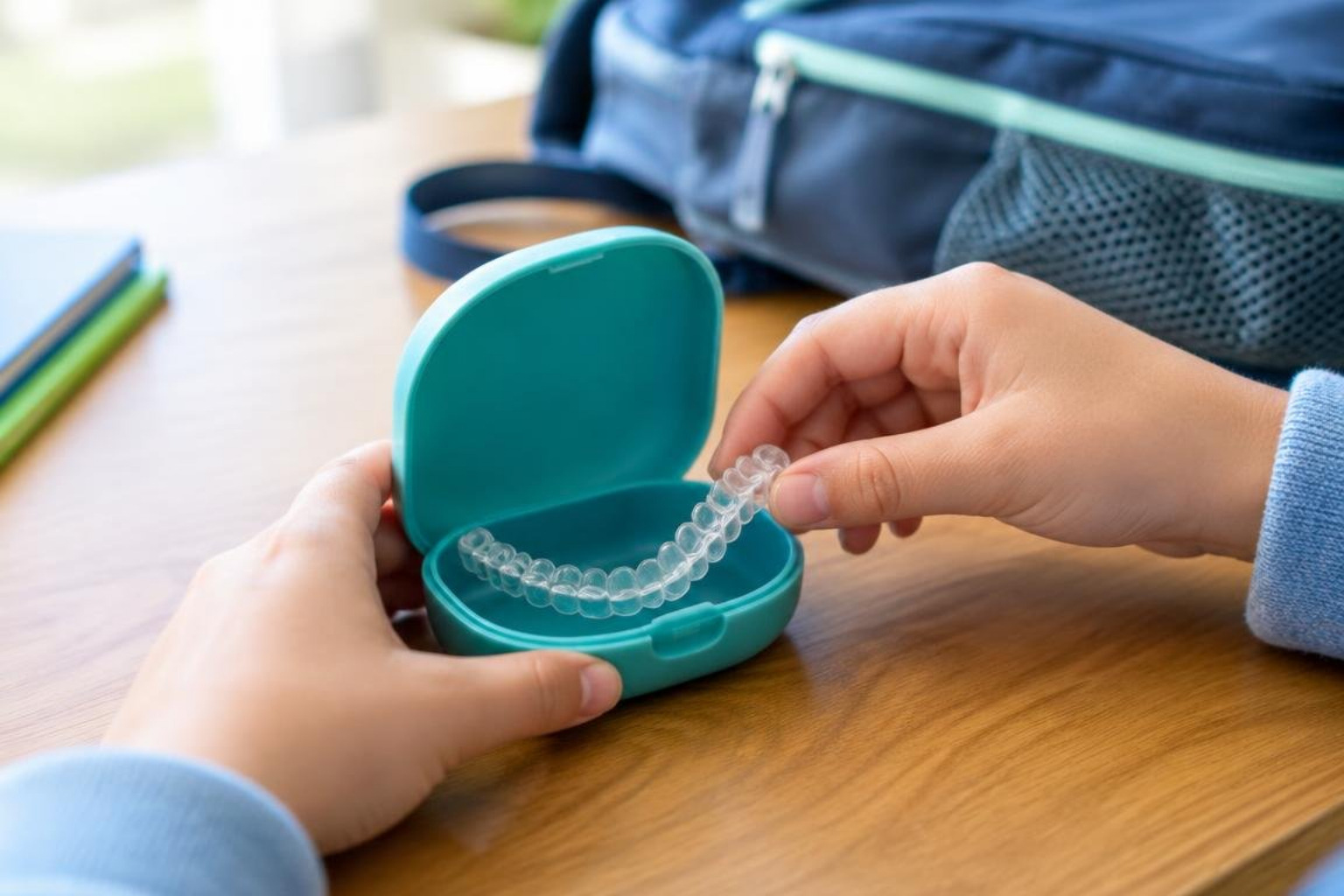
Clear aligners can fit into school, music and sport when children follow the routine I set for them. The trays need to be removed for meals and placed straight into their case, rather than wrapped in a napkin or left on a tray.
For sport, I can advise on when aligners should be removed and how a properly fitted mouthguard fits into the plan. A case in the school bag is one of the most useful habits for avoiding lost aligners.
Is Your Child Ready for Clear Aligners?
A child’s routine matters as much as the clinical plan. Clear aligners are removable, so they rely on consistent wear, careful storage and regular cleaning.
I encourage parents to think about how their child manages school items, home routines and responsibility for personal belongings. Fixed braces may be a more practical choice if those routines are likely to be difficult at this stage.
Some aligners include wear indicators that can help guide conversations about routine use. I review tracking at appointments and adjust my advice where needed.
What Do Clear Aligners Feel Like?
A new aligner can feel tight when it is first fitted because it has been made for the next planned stage. Your child should let me know if they experience ongoing discomfort, sharp edges or difficulty wearing an aligner.
Clear aligners do not have brackets or wires, but they still need regular review. I use these appointments to check how the aligners are fitting and whether the treatment plan remains appropriate.
Planning Treatment for Your Child
Treatment planning begins with a consultation, clinical examination and digital records. I use this information to explain the possible approaches, the day-to-day commitments and the next steps for your child.
If treatment is appropriate, I provide a clear plan so your family understands what is involved before proceeding. My team can also explain what information you may need when checking private health cover.
Clear communication matters when you are comparing invisible braces for children with fixed braces. I want you to leave the consultation knowing why a particular option has been recommended.
Your Next Step with Dr Nick
I have cared for Brisbane families for more than 30 years and personally see each patient at every appointment. My approach is to assess your child carefully, explain the options clearly and recommend an appliance that suits their clinical needs and everyday routine.
At my Chermside practice at 510 Rode Road, North Brisbane families can discuss clear aligners, fixed braces and whether treatment is appropriate now or should be monitored. I provide transparent guidance so you can make an informed decision for your child.
When you are ready to talk through the options, book a consultation with me.
Frequently Asked Questions
What are invisible braces for children?
Yes, invisible braces for children usually refers to clear aligners, which are custom-made plastic trays worn over the teeth. They guide planned tooth movements in stages and can be removed for eating and brushing. I assess whether they are suitable for each child’s developing teeth and bite.
When should my child have an orthodontic assessment?
An assessment can be useful once adult teeth begin to emerge. I look at the way the teeth and jaws are developing, then explain whether monitoring or treatment may be appropriate. Some children benefit from being reviewed before any active treatment is needed.
How much do children need to wear clear aligners?
Clear aligners need consistent daily wear to follow the treatment plan. I explain the routine to your child and help your family decide whether it is realistic. If regular wear is likely to be difficult, fixed braces may be a more suitable option.
Are clear aligners suitable for every child?
No, clear aligners are not suitable for every child. They may be appropriate for certain spacing, crowding and bite concerns, but some tooth movements are better managed with fixed braces. A clinical assessment is needed before choosing an appliance.
What happens if my child loses an aligner?
Contact my practice for advice as soon as you notice an aligner is missing. I will tell you whether your child should wear a previous aligner, move to another stage or arrange a replacement. Keeping aligners in their case whenever they are removed can help prevent this situation.
Can children play sport with clear aligners?
Yes, many children can continue with sport during clear aligner treatment. I will advise you on when aligners should be removed and how a properly fitted mouthguard should be used. Sport and orthodontic treatment can be planned together around your child’s activities.
How should children clean clear aligners?
Children should rinse their aligners with cool or lukewarm water and clean them as directed. Hot water can affect the shape of the trays, so it should be avoided. Brushing teeth after meals before reinserting the aligners also supports good everyday oral hygiene.


